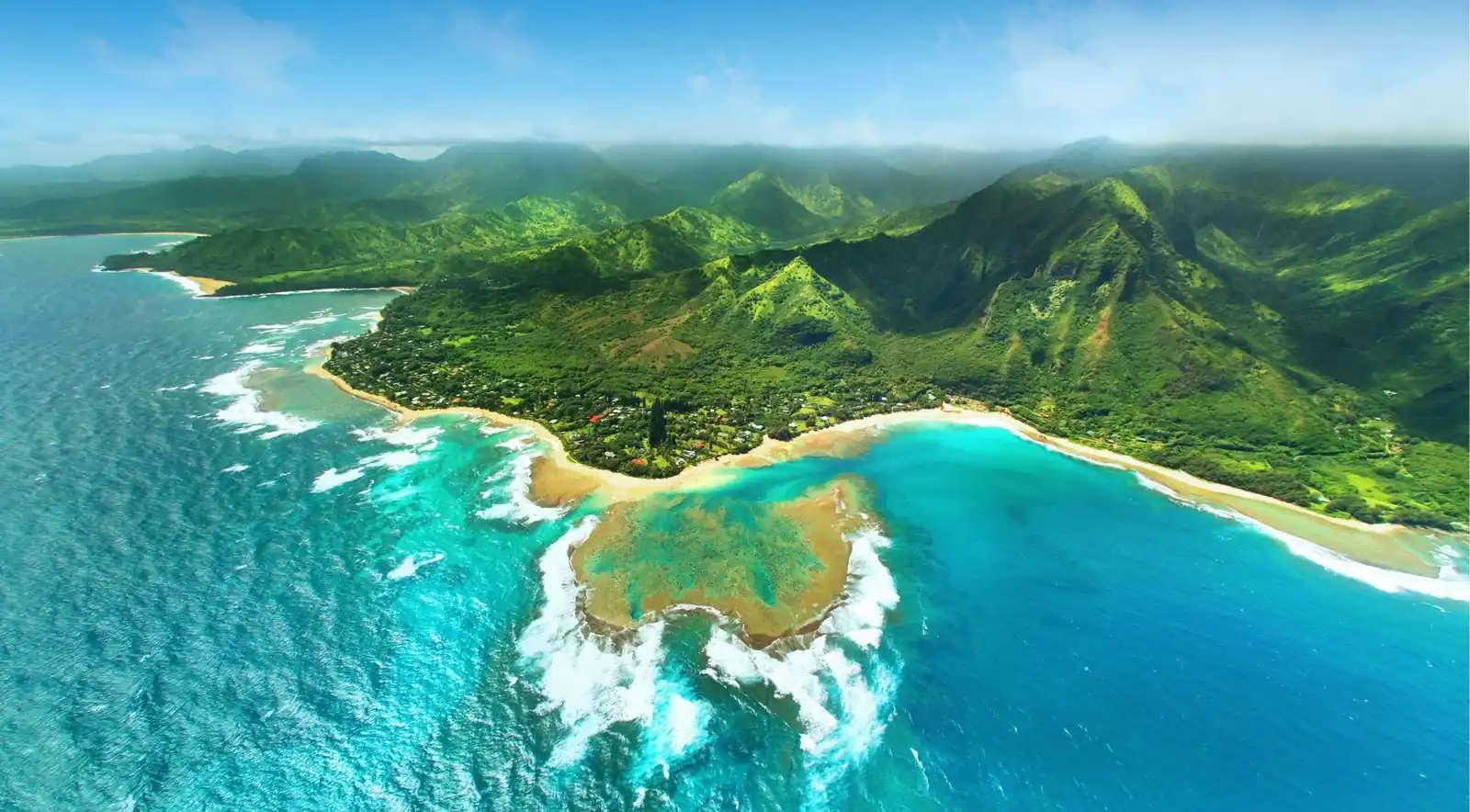
- 4.8–5.0★ across the flights we list
- 30–75 min typical flight length
- Doors on or off your choice on most flights
- Mornings calmest air, clearest views
- Free cancellation on every flight listed
Why a Hawaii Helicopter Tour Is Worth It When So Much of the Coastline Has No Road
For most visitors the answer is yes, and for one specific reason: access. Kauai's northwest shore breaks into sea cliffs that rise around 4,000 ft straight out of the Pacific, and no road crosses them — which is why you cannot drive a loop around the island. Maui's north-shore valleys are the same story. A flight is the only practical way most people reach that terrain in an afternoon.
That access carries a real cost: a helicopter flight is usually the single most expensive item on a Hawaii itinerary. The honest rule of thumb is this — if your trip is already full of coastal viewpoints and the budget is tight, this is the easiest big-ticket item to cut. But if you want to see Waimea Canyon's roughly 3,600 ft walls from above, or set down in a rainforest valley that has no trail leading to it, nothing else does the job.
What You See From the Air
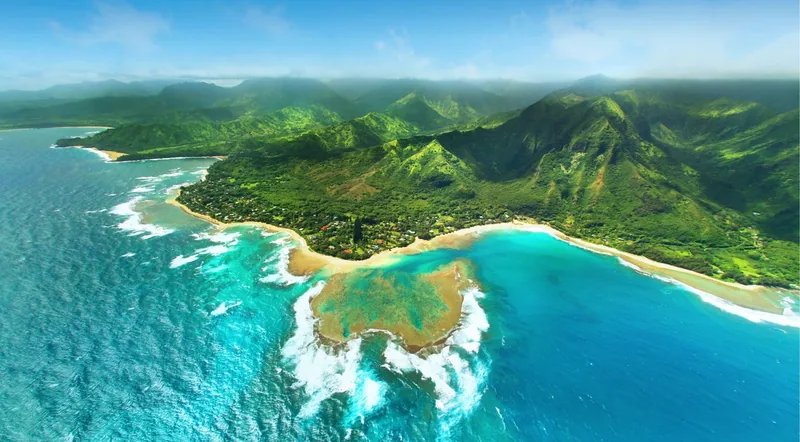
- Nā Pali Coast sea cliffs — roughly 17 miles of coastline with no road
- Waimea Canyon — roughly 10 to 14 miles long and up to about 3,600 ft deep
- Manawaiopuna Falls, the waterfall used in Jurassic Park
- Maui's north-shore waterfalls along the Road to Hana
- Waiʻaleʻale crater walls, among the wettest places on Earth
What's Typically Included
- A pilot-guide giving live commentary through the flight
- Noise-cancelling headsets so the commentary is audible over the rotor
- Free cancellation — from 24 hours to 3 days, depending on operator
- A doors-on or doors-off seat on most flights
- On some tours, a landing with time on the ground
How a Maui Helicopter Tour Works: 75 Minutes, 5 Stages, One Rainforest Landing
From check-in at Kahului Heliport to the landing in the Wailua Valley — what happens on our top pick, stage by stage.
-
Check in at Kahului Heliport
Arrive at least 30 minutes before departure. Every passenger aged 18 or over needs a government-issued photo ID — a REAL ID-compliant licence or a valid passport, and photocopies or phone photos are not accepted. This is also when the weigh-in happens, and seats get assigned by weight and balance rather than by who booked together.
-
Lift off over Paia and Hoʻokipa
The flight heads out along Maui's north coast, over the old sugar town of Paia and Hoʻokipa Beach Park, the windsurfing break that draws crowds when the swell is up. Your pilot talks through what you are passing on the headset from the moment you clear the pad.
-
Follow the Road to Hana from above
Past Haiku the coastline turns into a run of cliffs, forest and waterfalls that the road only glimpses. You also pass over Peahi — the wave better known as Jaws — and the outcrop local pilots call Jurassic Rock. This stretch is the reason to fly rather than drive it.
-
Land in the Wailua Valley
The helicopter sets down for about 30 minutes at a former taro plantation deep in the valley, where banana and coconut palms have taken over. You get out and walk the forest floor — an area with no road and no marked trail to it. This landing is what separates this flight from a straight fly-over.
-
Fly back to Kahului
Board again for the return leg to Kahului, with a second pass over the north-shore coastline on the way in. The whole experience runs about 75 minutes door to door, which leaves most of the day free.
The Hawaii Helicopter Tour We Recommend Starting With
The one flight on this page that puts you on the ground in terrain you cannot otherwise reach.
Maui: Road to Hana Helicopter & Waterfall Tour with Landing
Why we recommend it: it is the only flight on this page that lands — about 30 minutes on the ground in a valley with no road to it — and it does that while holding 4.8 out of 5 across 335 reviews.
Operated by Maverick Helicopters out of Kahului, the route runs the length of Maui's north shore, over Paia, Hoʻokipa and Haiku, then along the Road to Hana where the cliffs and waterfalls stack up. The landing sits in the Wailua Valley on a former taro plantation now grown over with banana and coconut palms.
- Helicopter flight along Maui's north-shore coastline
- A landing of about 30 minutes in the Hana rainforest
- Live in-flight commentary from your pilot
- Aerial views of Peahi (Jaws) and the Road to Hana
- Free cancellation up to 3 days before departure
Flights depart Kahului Heliport; check in 30 minutes before departure and bring photo ID. Check live dates and book on the right. Our guide to the Hana rainforest flight covers the four-passenger minimum, how seats are assigned and what happens to the landing in bad weather.
Maui Helicopter Tours With a Landing: Ground Time, Roadless Valleys, Live Commentary
Wailua Valley, Peahi and the Road to Hana — what changes when the flight actually sets down.
You get out, not just fly over
Most Hawaii helicopter tours are pure fly-overs. This one sets down for about 30 minutes at a former taro plantation in the Wailua Valley, so you spend time standing in rainforest that has no road and no marked trail reaching it.
The stretch the Road to Hana only glimpses
The famous drive is slow, winding and mostly walled in by forest. From the air the same coastline reads as a continuous run of sea cliffs and waterfalls — and you cover it in minutes rather than a full day of switchbacks.
A pilot-guide, not a recording
Commentary comes live over the headset from the pilot flying the aircraft, so it tracks what is actually below you on the day. Reviewers name their pilots by name more often than they name the landmarks.
Free cancellation up to 3 days out
You can cancel for a full refund up to 3 days before departure — a wider window than the 24 hours most Hawaii flights offer. Flights must be reconfirmed 72 hours ahead, so put a reminder in your calendar.
Other Experiences You Might Enjoy Across the Islands
A flight is one morning. These are the things people book around it.
A helicopter tour occupies about ninety minutes of a two-week trip, and it is usually booked alongside the things it flies over. On Kauai that means a Nā Pali Coast boat trip into the sea caves, or the free lookouts along Waimea Canyon. On Maui, the Road to Hana by car and sunrise at the Haleakalā summit. On Oʻahu, Pearl Harbor and the USS Arizona Memorial, Diamond Head, and the North Shore surf breaks. And on the Big Island, Hawaiʻi Volcanoes National Park and the Mauna Kea summit — which, since helicopters can no longer overfly the Kīlauea summit, is now the only way to see the active eruption. Here is what else is bookable nearby.
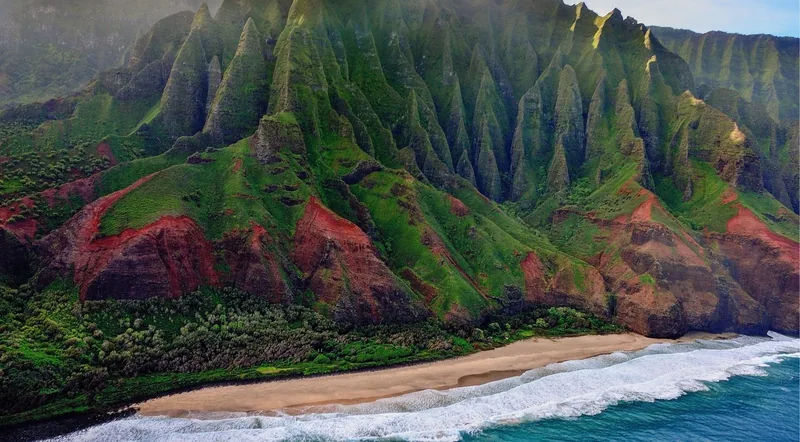
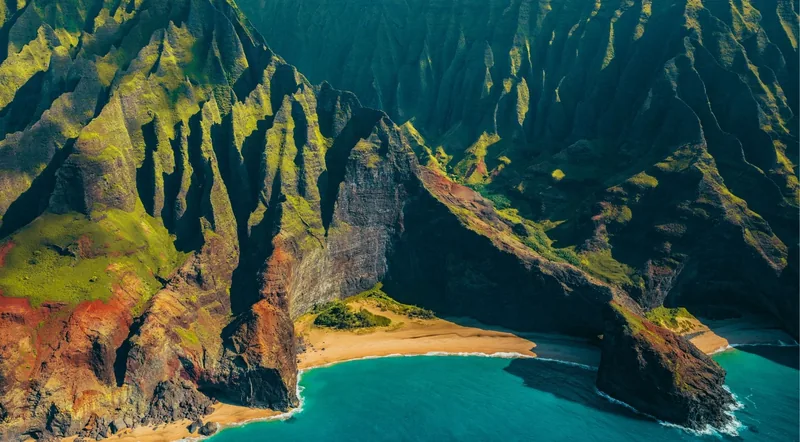
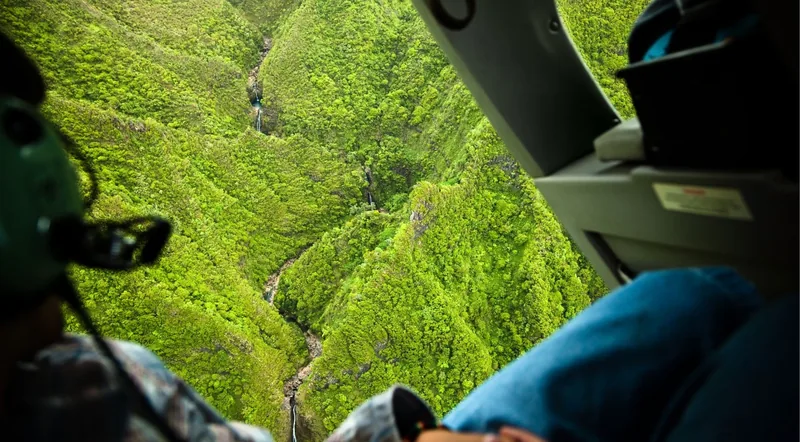
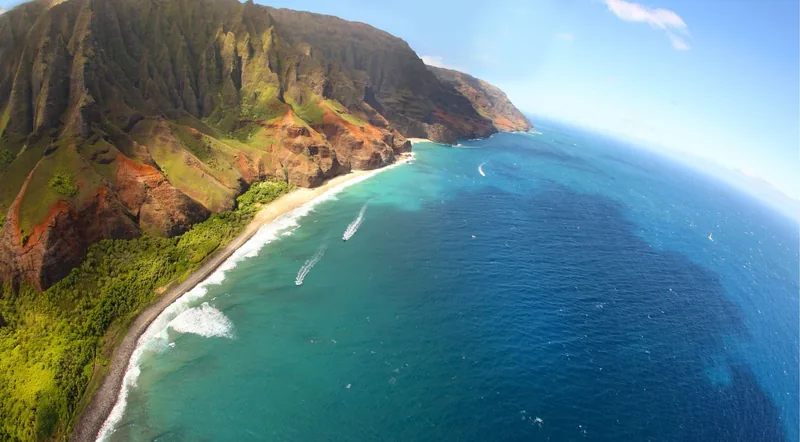
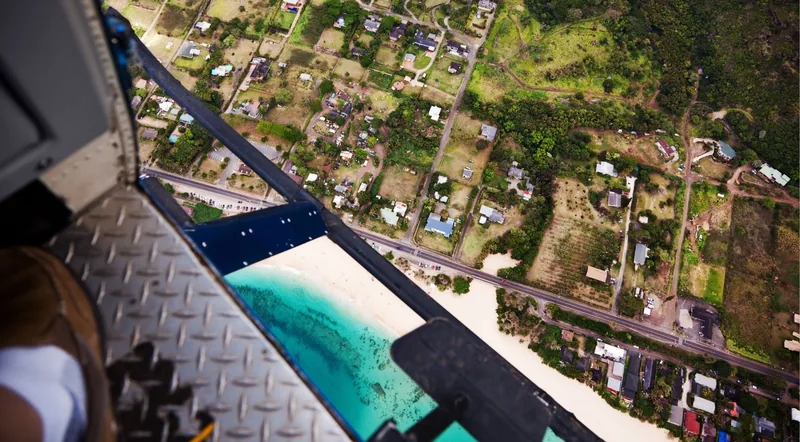
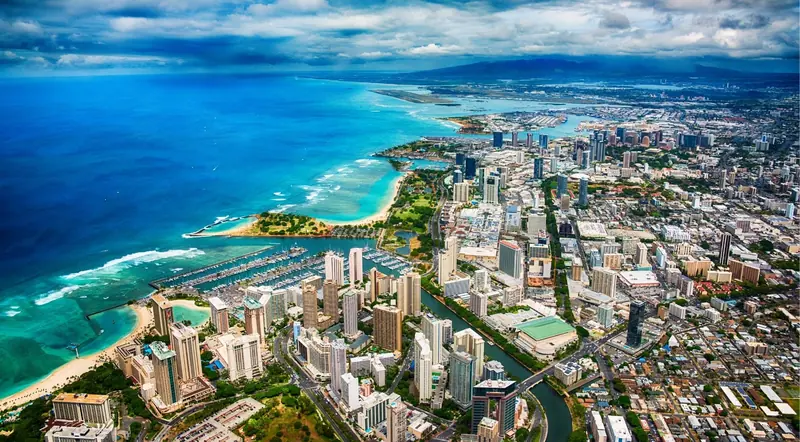
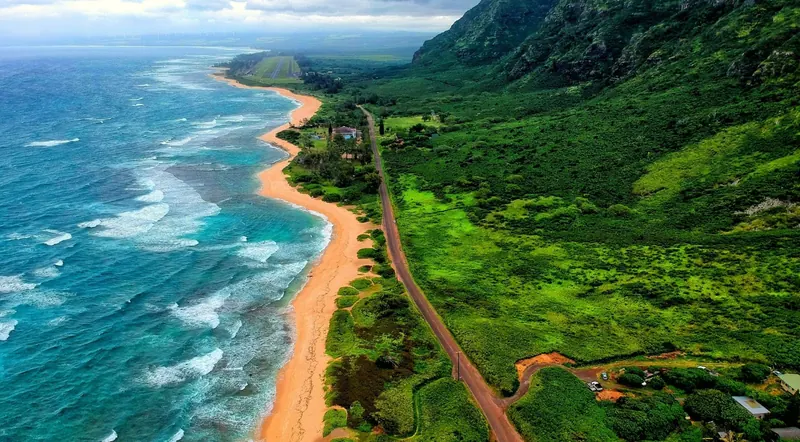
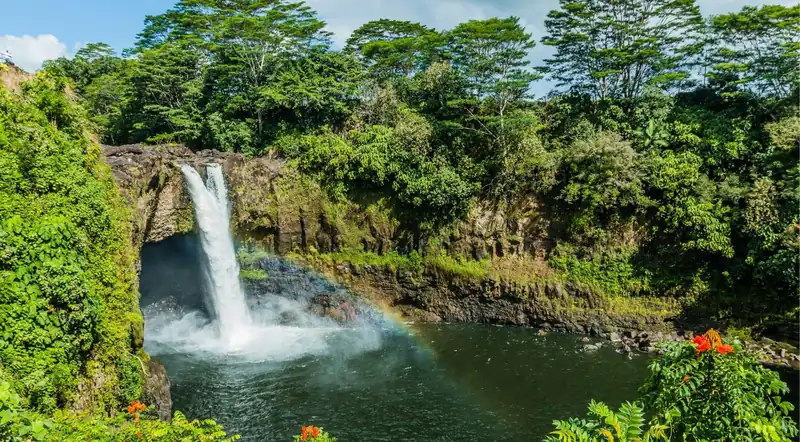
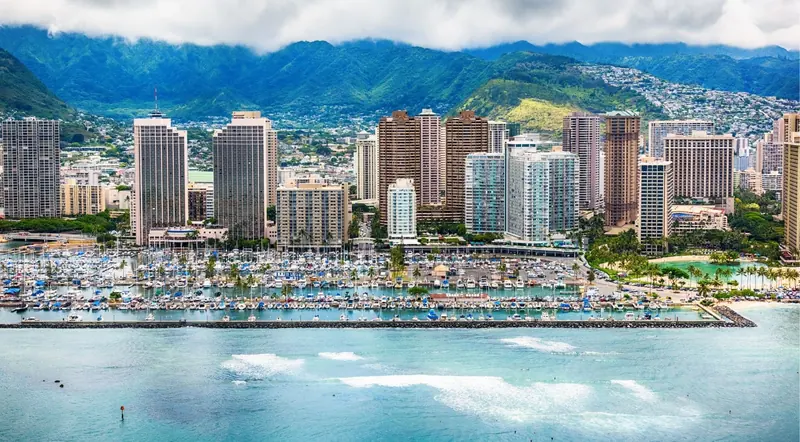
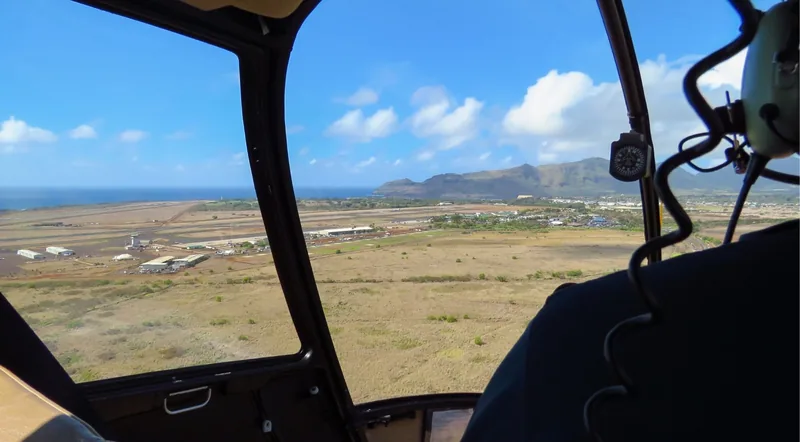
Hawaii Helicopter Tours in Photos
Scroll or drag to browse the coastlines, canyons and valleys these flights cover.

What's Included on the Maui Landing Flight — and What Isn't
Taken from the operator's own listing for the Road to Hana flight with landing.
Included
- The helicopter flight along Maui's north shore
- A landing of about 30 minutes in the Hana rainforest
- Live in-flight commentary from your pilot
- Headset for each passenger
- Free cancellation up to 3 days before departure
Not included
- Hotel transfers — you make your own way to Kahului Heliport
- Tips for the pilot and ground crew
- An extra seat if you weigh 275 lb or more (required, charged separately)
- Food and drink beyond anything the operator offers on the day
- Travel insurance
Booking a Hawaii Helicopter Tour vs Driving, Sailing or Skipping It: 4 Trade-offs
Road to Hana, Nā Pali boat trips and lookout points — where a flight wins and where it does not.
A full day of switchbacks, or 75 minutes
The Road to Hana takes most of a day and hems you in with forest for much of it. A flight covers the same coast in a fraction of the time and shows you the waterfalls the road never reveals. Driving wins if you want to stop, swim and eat along the way.
Scale and interior, or sea caves and snorkelling
A Nā Pali boat trip gets you close to the sea caves and into the water, but only ever sees the coast from sea level. A flight adds the interior — Waimea Canyon, the crater walls, the inland falls — that no boat can reach.
Free viewpoints cover some of it
Waimea Canyon and Kalalau lookouts are free and genuinely good. What they cannot show you is the roadless coastline between them, or the valley floors. If the free viewpoints are enough for you, that is a reasonable call.
The honest case for not booking
This is the priciest line item on most Hawaii itineraries. If your days are already full, if you are travelling with someone who is anxious about flying, or if the budget is stretched, skipping it costs you scenery but nothing essential.
Which Hawaiian Island Is Best for a Helicopter Tour? Kauai vs Maui vs Oahu vs Big Island
Nā Pali cliffs, the Road to Hana, Pearl Harbor and Hualālai — the short answer for each, criterion by criterion.
The consensus answer is Kauai, and it rests on one number: over 70% of the island is inaccessible by land. There is no road that circles Kauai. Island Helicopters puts it plainly — "If jaw-dropping cliffs, hidden waterfalls, and cinematic landscapes are your thing, Kauai is the clear winner." The Hawaii Vacation Guide agrees: "While all of the islands offer spectacular sights from the air, Kauai has the most dramatic helicopter views. Because so much of the island is inaccessible by car…"
Two honest caveats about that. First, the 70% figure is an industry-standard marketing number repeated near-verbatim by Blue Hawaiian, Island Helicopters, Air Kauai and Hawaii Tours — directionally sound, but not a government statistic. Second, many of the strongest "Kauai is best" statements come from Kauai operators themselves. Treat the superlatives as directional rather than neutral.
The real answer depends on what you want. Kauai wins on raw scenery and road-inaccessibility. The Big Island wins if volcanic activity and terrain variety are the priority. Oʻahu wins on convenience, price and doors-off access. Maui wins on sea cliffs and the Molokai crossing.
| Criterion | Kauai | Maui | Oahu | Big Island |
|---|---|---|---|---|
| Signature sight | Nā Pali sea cliffs, Waimea Canyon, Manawaiopuna Falls | Honokōhau Falls, Molokai sea cliffs, Road to Hana | Waikiki, Diamond Head, Pearl Harbor, Kaʻaʻawa Valley | Kīlauea caldera, Waipiʻo, Hāmākua waterfalls |
| Terrain no road reaches | The most of any island — over 70% inaccessible by land | West Maui interior, Hāna rainforest, Molokai's north shore | Least of the four — Oahu is well covered by road | Waipiʻo and Waimanu interiors, closed volcano zones |
| Tallest thing you see | Waimea Canyon — up to ~3,600 ft deep, 10–14 miles long | Molokai's north-shore sea cliffs — the world's tallest, ~3,315 ft (Guinness) | Koʻolau range and the Nuʻuanu Pali cliffs | Waipiʻo and Waimanu sea cliffs — about 2,000 ft |
| Tallest waterfall | Manawaiopuna (Jurassic) Falls — a ~400 ft single drop | Honokōhau Falls — tallest on Maui, ~1,119 ft (the "1,749 ft / tallest in Hawaii" claim is disputed marketing) | Sacred Falls | Hiʻilawe Falls — about 1,200 ft |
| Landing included? | Yes — Jurassic Falls, an Island Helicopters exclusive | Yes — about 30 minutes on the ground on our top pick | No — Oahu tours are flyover-only | Yes — Blue Hawaiian's Laupahoehoe Nui landing, +$225 |
| Typical flight length | About 50 to 60 minutes; no true short tour | 45 to 75 minutes, or 65 to 90 for the circle island | 20, 30, 45 or 60 minutes — the short-tour island | 45 minutes to 1 h 45 m |
| Doors-off | Available from several operators | Air Maui only | A major doors-off market — Rainbow and Magnum | Rainbow and Mauna Loa, both at Kona |
| Price per minute | Middle — roughly $5 to $7 | Middle — roughly $5 to $7 | Cheapest — about $14/min but only $280 total for 20 min | Highest total — $719 to $760 for the 1 h 45 m Spectacular |
| Fatalities 2000–2019 (Civil Beat, Jan 2020) |
By far the worst — 25, plus nine of the state's 13 fatal crashes overall | Seven | Four | Four, and no fatal tour crash since |
| Best for | Scenery above all else — the strongest views in the state | Sea cliffs, tall waterfalls and the Molokai crossing | Short trips, tight budgets and doors-off photography | Volcanic landscape rather than green cliffs |
Short version: fly Kauai if scenery is the only thing you care about, Maui if you want sea cliffs or to get out and stand in it, Oʻahu if you are short on time or money, and the Big Island if volcanic terrain is the draw — knowing that no flight there can cross the Kīlauea summit any more.
Which sights actually reward flying — and which do not
Kauai's interior — Nā Pali, Waimea, Waiʻaleʻale, Jurassic Falls — and Molokai's and Maui's sea cliffs and tall waterfalls genuinely cannot be seen adequately any other way. That is the strongest case for a ticket. By contrast, much of Oʻahu can be seen from the ground: Waikiki, Diamond Head and Pearl Harbor are all accessible, and the helicopter adds perspective and speed rather than exclusive access. The Big Island's caldera complex is a genuine differentiator when an episode is active — but the ATMP now keeps every authorised route away from the summit, so the eruption itself is a ground-level sight.
Island by Island: Who Flies What, From Where
Lihue, Kahului, Honolulu, Hilo and Kona — the four flying islands in detail.
Kauai — the scenery island
Kauai flies out of Lihue, and it is the island the whole category is built around. The route takes in the Nā Pali Coast; Waimea Canyon, the "Grand Canyon of the Pacific," roughly 10 to 14 miles long and up to about 3,600 ft deep; Mount Waiʻaleʻale, one of the wettest places on earth, and its Weeping Wall and crater; Manawaiopuna Falls — the Jurassic Falls, a roughly 400-ft single drop in Hanapepe Valley, on private land and reachable only by helicopter; and Hanalei Bay and Princeville.
Kauai is also where the landing tour lives: Island Helicopters holds the exclusive right to set down at Jurassic Falls. That specific product is not sold on GetYourGuide, so if you want the landing you will need to book it with the operator directly. What is bookable here covers the same coastline and canyon as a flyover.
Our picks on GetYourGuide: for the classic route, the Lihue Deluxe Waterfall Safari with Safari Helicopters — 4.8 from 485 reviews, from $336, which covers Waimea Canyon, the Nā Pali cliffs, the Waiʻaleʻale crater waterfalls and Jurassic Falls from the air. For the highest-rated option, the Kauai Eco Adventure Helicopter Tour — 5.0 from 46 reviews, from $409, a smaller review base but the strongest score on this page. Our full Kauai helicopter tour guide covers every operator, the exclusive Jurassic Falls landing, the doors-off rules and this island's safety record in detail.
Maui — the sea-cliff and waterfall island
Maui flies mostly from Kahului, with some West Maui and Kapalua departures. Four operators matter here. Air Maui at Kahului is the only doors-off operator on Maui, flying the Hughes 500 and promoting a "25-year perfect safety record"; it also runs Air Kauai as a sister company. Blue Hawaiian flies the EC130 Eco-Star from Kahului. Maverick Helicopters is a recent Hawaii entrant with a large Grand Canyon and Las Vegas presence. Sunshine Helicopters flies Kahului, and historically Kapalua in West Maui. Maui's road-inaccessible terrain — the West Maui Mountains' deep interior, Honokōhau Falls, the Hāna rainforest interior and Molokai's north-shore sea cliffs — is, in hawaii-guide.com's phrasing, "completely inaccessible by road and unreachable on any reasonable hike." One gap we could not close: we found no confirmation of current 2026 fixed-wing sightseeing operations on Maui (Alakaʻi Air, Hawaii Helicopters Maui) — if a plane rather than a helicopter is what you want on Maui, verify directly before you plan around it.
The routes divide cleanly. The West Maui & Molokai flight, about 45 to 50 minutes, is the most popular on the island — it crosses the Pailolo Channel to Molokai's north-shore sea cliffs, the tallest in the world at about 3,315 ft per Guinness World Records. The Hāna and Haleakalā route, roughly 45 to 65 minutes, covers the East Maui valleys, the waterfalls and the crater, including Honokōhau Falls, the tallest waterfall on Maui at about 1,119 ft — operators bill it as "the tallest in Hawaii at ~1,749 ft," but that figure is disputed marketing, and the state record belongs to ʻOloʻupena Falls on Molokai at about 2,953 ft — bookable as Air Maui's 45-minute Hāna Rainforest and Haleakalā Crater flight — 5.0 from 21 reviews, from $396, though 21 reviews is a thin base. A circle island runs 65 to 75 minutes, and the premium 75 to 90-minute routes add a landing — bookable as Blue Hawaiian's Maui & Molokai Spectacular with the Ulupalakua Ranch landing — 5.0 from 7 reviews, from $559, though 7 reviews is a very thin base — or Maverick's Hāna rainforest landing with a champagne toast.
Prices run $300 to $500+. Air Maui's West Maui & Molokai flight lists around $310 doors-on, with third-party specials from $249.95. Doors-off to Molokai is priced as an open seat at $269 plus a $150 fuel surcharge, so $419, with a front-seat upgrade at $200 for two seats.
Our picks on GetYourGuide: for the most popular route, the 55-minute Two-Island Scenic Flight to Molokai with Maverick — 4.9 from 192 reviews, from $369, which takes in Honokōhau Falls and ʽĪao Valley. For doors-off, the Air Maui Doors-Off West Maui and Molokai tour — 4.8 from 43 reviews, from $452. And for the landing, our featured Road to Hana flight with a 30-minute rainforest landing. Our full Maui helicopter tour guide covers all four operators, the Haleakalā crater restriction, Air Maui's separate fuel surcharge and Lahaina routing.
The Lahaina burn zone: ask before you book
West Maui circuit routes pass over the August 2023 Lahaina burn zone. If you would rather not see it from the air, ask your operator before booking how they route over Lahaina, and whether they can put you on a Hāna-side itinerary instead. Most will accommodate the request. It is a place people died, not a sight — and no honest guide should present it as one.
Air Maui's doors-off rules, in their own words
Air Maui is blunt about what you may carry: "ONLY YOUR CELL PHONE IS ALLOWED ON BOARD… No hats, bags or any loose items allowed. Must wear closed toed shoes. No flip-flops or sandals. No sarongs, dresses or loose cover ups… Long hair must be tied up at all times." A jacket is provided and required. If you were planning to bring a camera bag, plan again.
Oʻahu — the short-tour and doors-off island
Oʻahu departs from Daniel K. Inouye / Honolulu Airport — about 20 minutes from Waikiki, up to 40 in rush hour — plus Turtle Bay on the North Shore and Kalaeloa. Operators include Blue Hawaiian; Rainbow Helicopters, doors-on or doors-off, often at the same price and free on select routes; Magnum Helicopters, flying the Hughes MD-500 of Magnum P.I. fame and founded in 1988 as Makani Kai, described as "Oʻahu's oldest and most experienced helicopter tour company"; Novictor/Hawaii Helicopters; Makani Kai/Mauna Loa; and Paradise, historically at Kalaeloa/Ko Olina and Turtle Bay — though Paradise's current status is disputed, see below.
This is the short-tour island, and essentially the only one. A 20-minute Waikiki, Diamond Head and Pearl Harbor city tour is an Oʻahu-only product. There are 30-minute routes, 45 to 50-minute doors-off flights, and the 60-minute "Royal Crown of Oʻahu" circle island. You see Waikiki and Diamond Head; Pearl Harbor and the USS Arizona Memorial; the North Shore — Pipeline, Sunset, Waimea Bay, Shark's Cove; the Koʻolau range and Sacred Falls; and Kaʻaʻawa Valley, the Kualoa Jurassic Park backdrop. As hawaii-guide.com puts it, Oʻahu is "the underrated helicopter island" — "Kualoa's fluted Koʻolau ridges… read as cartoonish from the ground. The scale only clicks from the air."
Prices start at $280 shared or $420 private for Rainbow's 20-minute flight, and $440 for the 60-minute Royal Crown. Magnum's doors-off runs $350 to $420. The minimum age for an open-door seat is 12. Pearl Harbor is flown over on many routes — flyover only, no landing. One caveat we could not resolve: we found no specific 2026 overflight prohibition, but temporary flight restrictions and military airspace rules around Pearl Harbor change, so treat any operator's Pearl Harbor promise as conditional and confirm it on the day.
Our picks on GetYourGuide: the Waikiki 20-minute doors-on or doors-off tour with Rainbow — 4.9 from 33 reviews, from $405 for the classic short hop over Waikiki, Punchbowl, Diamond Head and Pearl Harbor; the 30-minute Path to Pali — 5.0 from 107 reviews, from $440, which adds Hanauma Bay, Makapuʻu Point and the Nuʻuanu Pali cliffs and has the strongest review base of the three; and the 60-minute circle island with doors on or off — 4.9 from 456 reviews, from $540.
Big Island — the volcanic island
Four operators fly the Big Island from Kona, Hilo and Waikoloa, with tours from $229. Blue Hawaiian flies the EC130 T2 from Hilo Heliport and Waikoloa Heliport and is the largest operator in Hawaii — more reviews than the other three combined — running the Big Island Spectacular (1 h 45 m from Waikoloa, $719 to $760, the longest standard tour on the island), the Kohala Coast Adventure (45 to 50 min, $439), Discover Hilo (50 min, $459) and the Hilo Waterfall Experience ($485). It has no doors-off option and assigns seating by weight at check-in. Safari Helicopters is the longest-running operator, at Hilo. Mauna Loa Helicopters and Rainbow Helicopters both fly from Kona, and both offer doors-off — though note that Mauna Loa is primarily a flight school operating under Part 91, not a Part 135 air-tour certificate holder, which is worth weighing against the questions in our safety section below. Blue Hawaiian describes its flagship route as covering "the still-active Kilauea volcano, black sand beaches, volcanic badlands, sea cliffs, the Kohala Mountains, cascading waterfalls, lush rainforests."
A conflict we resolved: some third-party pages, Tripster among them, claim Blue Hawaiian now runs "select 90-minute routes… doors-off" on the Big Island, while lovebigisland states flatly there is "no doors-off option." The dispute traces to Paradise's former doors-off "Lava and Rainforest" flight out of Hilo, which ended with that company's closure — Blue Hawaiian flies doors-on EC130 group tours only here. If doors-off on the Big Island is what you want, it is Rainbow or Mauna Loa, both at Kona.
Hilo is the cheapest and most volcano-efficient starting point, being closest to Kīlauea — "a 55-minute Hilo tour covers substantially more active terrain than a 55-minute tour from Kona." Kona and Waikoloa flights are longer and pricier simply to reach the volcanic zone. Blue Hawaiian's exclusive Laupahoehoe Nui landing, beside a roughly 1,200-ft waterfall, adds $225.81.
The critical accuracy point: do not write off, or book, this island assuming lava is flowing. Kīlauea has been erupting episodically since 23 December 2024, and as of the USGS notice of 6 September 2026 the summit eruption in Halemaʻumaʻu is paused — Alert Level ADVISORY, Aviation Color Code YELLOW — with episode 55 forecast for 7 to 10 September 2026. Episodes have lasted from 8 hours to 8 days, most a day or less, and pauses have run up to about 21 days. Episode 52 fountained to about 500 ft for 7.4 hours on 28–29 July 2026. On a random day, expect a glowing, steaming vent and fresh volcanic landscape, not fountaining — and note that since December 2023 no air tour may overfly the summit at all.
Our pick on GetYourGuide: the Kailua-Kona Hualālai Volcano doors-on or doors-off tour with Rainbow — 4.8 from 14 reviews, from $640. That is a thin review base for the price, so read the recent ones. Our full Big Island helicopter tour guide covers the ATMP restrictions, the Hilo-versus-Kona decision, every operator and the current eruption status in detail.
Hawaii Helicopter Tour Prices Compared Across All Four Islands
Cheapest short tour, standard 45 to 60 minutes, extended, doors-off, landing and private — island by island.
| Tour type | Oahu | Maui | Kauai | Big Island |
|---|---|---|---|---|
| Cheapest short tour | ~$280 — 20 min, Rainbow | Short West Maui scenic | — no true short tour | From $229 entry |
| Standard 45–60 min | ~$440 — Royal Crown 60-min | ~$310–$430 — West Maui / Molokai | ~$300–$400 | $439 Kohala 45–50 min; $459 Discover Hilo 50 min |
| Extended | — | 65–90 min circle or premium | 50–55 min plus landing | $719–$760 — Big Island Spectacular, 1 h 45 m |
| Doors-off | Free or included on select Rainbow routes; Magnum $350–$420 | ~$419 — Air Maui only | Available from several operators | Rainbow and Mauna Loa, Kona only |
| Landing tour | — | Blue Hawaiian Ulupalakua / Hāna landing | Jurassic Falls — Island Helicopters exclusive | Laupahoehoe Nui — +$225, Blue Hawaiian |
| Private charter | Rainbow private from $420 for 20 min | Air Maui and others | Yes | Mauna Loa — all flights private |
Cheapest and most expensive per minute
Oʻahu is cheapest per minute — a $280 20-minute tour works out at roughly $14 a minute but only $280 in total, and its sights sit close to the airport. The Big Island is the most expensive in absolute terms: $719 to $760 for the 1 h 45 m Spectacular, about $6.85 to $7.24 a minute but the highest total, because of the distance to the volcanic zone and the island's sheer size. Kauai and Maui sit in the middle at roughly $5 to $7 a minute. The economics track geography exactly — short hops over dense scenery are cheap, long transits to remote terrain are not.
Surcharges that are not in the headline price
- Fuel surcharge: Air Maui adds about $150 to a doors-off open seat.
- Weight and comfort seat: Blue Hawaiian charges a comfort-seat fee above 240–250 lb, and on the Big Island requires an adjacent empty seat above 240 lb. Paradise applied its extra-seat fee at 270 lb and over. Every passenger is weighed at check-in for weight and balance — this is standard, not optional.
- Green Fee / TAT: the statewide transient accommodations tax rose to 11% on 1 January 2026. It affects lodging, not the tour ticket, but it raises the overall trip cost.
- Booking-platform fees: third-party resellers often show a lower headline "special" and then add booking or service fees; booking direct sometimes lists the fuel surcharge separately instead.
Discounts worth asking about
Online-booking discounts, early-bird or first-flight-of-the-day rates, standby, and kamaʻāina (Hawaii resident) and military rates are common across operators on every island. None of them are advertised prominently. Ask.
Prices are moving upward
Every figure here was gathered from operator sites and resellers in 2025–2026 and they move with season, fuel and demand. The direction is up, and Big Island demand in particular spikes when an eruption episode is running, pushing waitlists on Hilo departures. Re-confirm any figure live before you commit.
Which Type of Tour: Doors, Duration, Landing, Aircraft and Seat
Doors-on or off, 20 minutes or 105, flyover or landing, helicopter or plane, shared or private.
Doors-on vs doors-off
Doors-off is a photography decision. No window glass means no glare and no reflections, and one TripAdvisor reviewer's summary is representative — "nowhere near as intimidating as we expected… more immersive." The trade-offs are real: colder, windier, louder, with strict no-loose-items rules and a minimum age of typically 12 for the open-door seat. Doors-on suits nervous flyers, families with younger children, and anyone prioritising comfort and hearing the narration. Some operators will put you doors-on in the front and doors-off in the back on the same aircraft.
Short vs standard vs extended
Twenty-minute tours are essentially an Oʻahu thing. Everywhere else, 45 to 60 minutes is the widely recommended sweet spot — Safari Helicopters puts it plainly: "For most travelers, 45 to 60 minutes is the sweet spot." The 1 h 45 m Big Island Spectacular is the main extended product in the state, and it exists because the Big Island is big.
Landing tours vs flyover-only
Landing tours are a Kauai and Big Island speciality. On Kauai, Island Helicopters holds the exclusive on the Jurassic Falls landing. On the Big Island it is Blue Hawaiian's Laupahoehoe Nui. Maui has a couple — Blue Hawaiian's, and Air Maui's oceanfront landing — including the 30-minute rainforest landing on our top pick. Most Oʻahu tours are flyover-only.
Helicopter vs fixed-wing aeroplane
Planes are cheaper, more fuel-efficient, smoother, and every seat is a window seat. Helicopters hover and manoeuvre into valleys, which planes cannot. The Big Island is the one place a fixed-wing plane has a genuine geographic advantage — it covers more ground and can capture Kīlauea and Mauna Loa on one flight. On Kauai, Wings Over Kauai's air tour of the Nā Pali Coast — 4.9 from 1,101 reviews, from $155 covers Nā Pali, Waimea and Jurassic Falls for roughly a third of a helicopter fare. Note that Mokulele has discontinued its inter-island air-tour product.
Private charter, front seat and co-pilot upgrades
Available across most operators. Air Maui's front-seat upgrade is $200 for two seats. Rainbow sells a private 20-minute Oʻahu flight from $420. Rainbow and Mauna Loa guarantee window seats; Blue Hawaiian does not, because it assigns seats by weight and balance at check-in.
If you are only flying once
Prioritise Kauai for pure scenery. Choose the Big Island if volcanic activity is your driver and an episode is active or forecast — check USGS first. And whichever you pick, hawaii-guide.com's summer-2026 advice holds in full: "Big Island first if you can… the lava-active flight is worth it… Don't book your one helicopter for the last morning of your trip." Weather cancels flights, and you want spare days to rebook.
What Recent Travellers Say About the Maui Landing Flight
Verified reviews for our top pick, left by travellers who flew in 2026.
Christopher · United States · July 2026I was grinning from ear to ear the whole time. Our pilot, Nate, was fun and enthusiastic. There is no better way to see the multitude of stunning north shore waterfalls; the region is very isolated. We landed briefly and walked around a beautiful grassy clearing, and were pleasantly surprised when he broke out a little champagne (for passengers only!)
Gail · United States · April 2026Our pilot and guide, John, was wonderful. Very smooth landing and take-offs. He always made sure everyone was ok. He had lots of information on what we were seeing. Overall, a fantastic experience.
Paula · United Kingdom · July 2026Amazing experience from maverick helicopters. Safe friendly and informative pilot. Would book again
Frank · United States · March 2026It was an awesome adventure more than I expected with incredible views and waterfalls
Rating and review counts throughout this page are taken from the operators’ GetYourGuide listings and were re-checked on 7 September 2026. This one reflects 335 verified GetYourGuide reviews for the Road to Hana flight with landing, re-checked on 16 October 2026.
How Safe Are Hawaii Helicopter Tours? The Rules, the Record and What You Can Control
FAA Hawaii-specific rules, the NTSB's findings on what actually goes wrong, and the one booking habit that matters most.
Hawaii has its own FAA air-tour rules
After a cluster of accidents in the early 1990s the FAA wrote rules specifically for Hawaii air tours. They set a 1,500 ft minimum altitude, require the pilot to file a performance plan before each flight, and require passengers to receive a water-ditching briefing.
It is not a spotless record
The NTSB has investigated dozens of Hawaii air-tour accidents since 1997, more than any other state. A December 2019 crash on Kauai killed seven people, and a March 2026 crash off the Nā Pali Coast killed three. These are rare events against very high flight volumes, but they are real.
Weather decisions are the recurring theme
The single most common thread the NTSB identifies is a pilot continuing into deteriorating visibility. In its 2022 report on the 2019 Kauai crash, the NTSB also faulted the FAA for not delivering weather-camera coverage and Hawaii-specific weather training it had recommended years earlier.
Treat a cancellation as the system working
You cannot audit an operator's maintenance from a booking page, but you can refuse to pressure anyone into flying. Book early in your trip so a scrubbed flight can be rebooked, take the morning slot when the air is clearest, and never treat a weather cancellation as an inconvenience to argue about.
SFAR 71 cut crashes — and shifted the cause
The 1,500 ft floor began as SFAR 71 in 1994 and was made permanent on 26 October 2003, later folded into 14 CFR Part 136 as §136.75(d)(1). Peer-reviewed data shows what it did: the sightseeing-helicopter crash rate fell from 3.4 to 1.8 per 100,000 flight hours, a 47% decrease — but weather-related VFR-into-IMC crashes rose from 5% to 32% of the total, and total fatalities were similar before and after. Fewer crashes overall; a rule operators contest because they say it forces them to fly near cloud. The FAA's 2008 Hawaii Air Tour Common Procedures Manual added below-1,500-ft procedures.
Only one Hawaii operator is currently TOPS-listed
Per the official TOPS member page, updated February 2026, Blue Hawaiian is the only current Hawaii TOPS member — listed across Maui, Hawaii, Kauai and Oahu. TOPS standards exceed FAA minimums: 1,000-hour pilot minimums, annual independent audits, flotation gear, and enroute-altitude and bank/pitch limits. Sunshine Helicopters self-describes as TOPS-certified and a founding member but is not on the current official list — treat that as possibly lapsed. Air Maui, Maverick, Rainbow, Safari and Mauna Loa: no TOPS membership found. That is not proof of lower safety, but it is worth knowing. One more wrinkle: Vertical magazine lists "Hawaii Helicopters" and Sundance among TOPS members, which does not match the official list — so check the official TOPS page rather than a secondary listing.
Nine of the last 13 fatal crashes were on Kauai
Honolulu Civil Beat, April 2026: "Fifty-one people have died in helicopter crashes since 2000… Hawaiʻi's accident total in that period exceeds Nevada, Alaska and New York… The Kalalau Beach accident was the 13th fatal helicopter crash in Hawaiʻi in 25 years and nine of those –– including the three most recent fatal accidents –– have been on Kauaʻi." Earlier tallies: 45 deaths from 2000 to 2019, and 48 by August 2024 after the Alii Kauai crash. NTSB data gives Hawaii the worst US helicopter-sightseeing safety record.
Blue Hawaiian's petition to fly at 700 ft
Helicopter Consultants of Maui, trading as Blue Hawaiian, petitioned the FAA (docket FAA-2025-0301, Federal Register 18 August 2025) to fly as low as 700 ft AGL — and 500 ft over razorback ridges — in specified areas of Oʻahu, Maui, Molokaʻi and Hawaiʻi Island. Its 20-page petition argues that at or above 1,500 ft "tour aircraft will very often be at the level of the clouds," and cites its Safety Management System, instrument-rated pilots, terrain-awareness systems and 700,000+ tour hours since 2000 without a weather-related accident. It drew more than 55,000 public comments, many in opposition. Still pending, no FAA decision and no stated timeline — FAA spokesman Ian Gregor "declined to comment on the pending petition." US Representative Ed Case formally opposes.
The four accidents worth knowing about
- 26 December 2019 — Safari Aviation AS350 B2 (N985SA), near Kekaha on Kauai's Nā Pali Coast — 7 killed, the pilot and six passengers including three children. The NTSB's final report (NTSB/AIR-22-05, 10 May 2022) faulted the pilot's decision to continue into deteriorating weather and the FAA's failure to implement prior safety recommendations. NTSB Chair Jennifer Homendy: "This tragedy should never have occurred. It was 100 percent preventable."
- 29 April 2019 — Kailua, Oʻahu — 3 killed when the helicopter broke apart.
- July 2024 — Alii Kauai Air Tours, Robinson R44, Kauai — 3 killed in an in-flight breakup after turbulence. The NTSB notes the R44 had the highest fatal accident rate among major helicopter makes between 2006 and 2016.
- 26 March 2026 — Airborne Aviation Tours, Hughes 369D/500 (N715KV), off Kalalau Beach on the Nā Pali Coast, Kauai — 3 dead, 2 survived, unusually including the pilot. The victims were Margaret Rimmler, 65, and Patrick Haskell, 59, of Massachusetts, and Oksana Pihol, 40. It was a doors-off thrill tour. Per flight records released on 8 April, "the aircraft was a Hughes 500 model built in 1979. It had already completed five flights before the crash that day and a turbulence advisory was active across all Hawaiian islands." The surviving pilot told the NTSB the aircraft experienced severe vibrations and loss of directional control near Kalalau. The preliminary report named no probable cause; the final report is expected in 2027.
No comparable recent fatal tour crash surfaced on Maui, Oʻahu or the Big Island in 2025–26. The Big Island's last notable tour incident was a non-fatal Paradise crash in a lava field near South Point.
Seven questions to ask an operator before you book
Each of these maps directly onto a documented NTSB concern, and any reputable operator will answer all seven without hesitating.
- Are you Part 135 certificated, not just Part 91?
- Are you accredited under TOPS, VAI/HAI-APS or IS-BAO?
- What are your pilots' flight hours, and how much Hawaii-specific experience do they have?
- How old is the aircraft, and is it single- or twin-engine?
- Does it carry floats or flotation gear and an ELT?
- What is your weather-cancellation and go/no-go policy?
- Do you operate a Safety Management System?
Sources: FAA Special Federal Aviation Regulation rules for Hawaii air tours; NTSB accident report AIR-22-05 (Safari Aviation, Kauai, 26 December 2019, published May 2022); NTSB preliminary report on the Airborne Aviation Tours accident off Kalalau Beach, 26 March 2026 — final determination expected 2027.
Hawaii Helicopter Tour Logistics: ID, Weigh-In, Timing, Clothing, Restrictions, Weather
REAL ID rules, the 275 lb seat threshold, the 30-minute check-in and the 24-hour scuba rule — what to sort before you arrive.
Duration and timing
Most Hawaii helicopter flights run 30 to 75 minutes. Book a morning slot between roughly 8am and 11am — the air is calmest, cloud has not yet built over the interior, and the light is better for photographs.
Meeting point and check-in
Our top pick departs Kahului Heliport on Maui, and you need to check in at least 30 minutes before departure. Late arrivals are refused without a refund. Hotel transfers are not included on this flight.
ID and the weigh-in
Every passenger 18 or over needs a REAL ID-compliant licence or valid passport — photocopies and phone photos are refused. Everyone is weighed for weight-and-balance, seats are assigned on that basis rather than by booking group, and anyone 275 lb or over must buy an extra seat.
What to wear
Solid dark colours cut window reflections on doors-on flights and make for cleaner photos. For doors-off, add warm layers and closed-toe shoes — it is cold and very windy up there. Hats are not allowed near the rotors and loose items usually go in a locker.
Who it suits
Children aged two and over need their own seat; under-twos can travel on an adult's lap with a birth certificate. You must wait 24 hours after scuba diving before flying. Flights need a minimum of four passengers to depart.
Booking ahead and weather
Book early in your trip so you have spare days if weather scrubs the flight. Our top pick must be reconfirmed 72 hours before departure, and cancellations are free up to 3 days out — a wider window than most Hawaii operators offer.
When to Fly: Morning Almost Always — With One Real Exception
Kauai's Nā Pali Coast faces west, and that changes the usual advice.
Time of day: morning, roughly 8 to 11 a.m.
Clearer skies, calmer winds, less cloud build-up, and better for anyone prone to motion sickness — the advice is consistent across Safari Helicopters, iflykauai.com and the Big Island TripAdvisor forum. Blue Hawaiian's own FAQ downplays it, saying time of day "most of the time… will make no difference," but the weight of independent advice is on mornings.
The exception: Nā Pali in the afternoon
Kauai's Nā Pali Coast faces west, so afternoon light can be spectacular there. As hawaii-guide.com puts it: "flights in the afternoon can be incredible along this stretch of coast as the valleys are lit up by the afternoon sun." If Nā Pali specifically is what you came for, an afternoon slot is a legitimate choice rather than a compromise.
Big Island: Kona is stable, Hilo is close
Kona and Waikoloa on the leeward side are the driest and most stable, especially on winter mornings — but afternoon vog, the volcanic haze, builds and degrades visibility. Hilo on the windward side is wetter with more morning rain, but sits closest to the active volcanic terrain.
Kauai: the wettest island, with strong microclimates
Local pilot knowledge matters more here than anywhere else. As iflykauai.com describes it, "it can be raining at Mount Waialeale while the Nā Pali Coast is bathed in sunlight." A cancelled morning does not mean a cancelled island.
Maui: trade-wind driven
The windward Hāna side is wetter, the leeward side drier. That is the whole pattern, and it is why West Maui and Molokai routes cancel less often than Hāna-side ones.
Season: summer for reliability, winter for waterfalls
Summer (June to August) and early fall (September to October) have the most reliable weather. Winter (November to March) is wetter but produces the fullest, most dramatic waterfalls — and brings humpback whales into view on coastal routes.
Weather cancellations: the norms are the same statewide
Pilots make the go/no-go call right up until flight time. If the operator cancels for weather you get a full refund with no fee — that is standard at Mauna Loa Helicopters, Blue Hawaiian and effectively everywhere else. The universal advice, and the one thing worth acting on: book early in your trip and keep a buffer day. Never book your only helicopter tour for your last morning.
What Could Go Wrong on a Hawaii Helicopter Tour? 8 Honest Caveats
Weather scrubs, the weigh-in, doors-off wind and lava that may not show — what we wish more booking pages said upfront.
-
Weather cancels flights, and not rarely
Operators call it on the day, close to departure, when the forecast is most reliable. A weather cancellation is refunded in full. Book your flight in the first half of your trip so you have days left to rebook.
-
Passing showers usually do not cancel anything
Hawaii's windward sides get short showers throughout the day. That is normal weather, not a grounding condition. Do not assume a wet morning at your hotel means your flight is off — wait for the operator to call it.
-
You will be weighed, every time
The FAA requires it for weight and balance. There is no way around it and no discretion at the desk. On our top pick, anyone at 275 lb or above has to buy a second seat, and two passengers over a combined threshold can trigger the same requirement on other flights.
-
You may not sit with the people you booked with
Seating is assigned by weight and balance, not by booking. Couples and families are regularly split across rows, and window seats are not guaranteed unless the listing explicitly says so. If photographs matter, check that detail before you pay.
-
Doors-off is cold and loud, not just dramatic
Even in Hawaii, the wind at altitude with no door is genuinely cold. It requires closed-toe shoes, tied-back hair and secured cameras. Doors-off is a photography choice — if you mainly want to look, doors-on is more comfortable and just as scenic.
-
Lava is never guaranteed on Big Island flights
Kīlauea's activity varies from month to month. A flight sold around the volcano may show you lava fields, craters and steam vents rather than anything flowing. Book the Big Island for the landscape and treat active lava as a bonus.
-
It is the most expensive hour of most Hawaii trips
A helicopter flight typically costs several times what any other single activity on the island does. The access argument justifies it for many travellers — but it is a genuine trade-off against a week of cheaper days, not a small add-on.
-
Photos through glass have limits
On doors-on flights, window reflections are real and a polarising filter does not work well against curved cabin glass. Wearing dark clothing and holding the lens close to the window helps more than any accessory. Accept that some frames will have glare.
Multi-Island and Inter-Island: What You Can and Cannot Fly
You cannot take a sightseeing helicopter from Oʻahu over Kauai or the Big Island. Here is what those packages actually are.
Maui to Molokai — a real helicopter crossing
This one is a helicopter flight, and it is standard: the West Maui & Molokai route, the most popular tour on Maui, crosses the Pailolo and ʻAuʻau Channels to reach Molokai's north-shore sea cliffs. Short water crossings between neighbouring islands are normal.
Maui to Big Island volcano tours — a combo package
These still operate in 2026, but as helicopter plus ground packages, not a single sightseeing flight across the channel. A typical example pairs an inter-island fixed-wing flight with a Big Island helicopter and ground segment, with the helicopter portion around $350, refundable if the flying leg cancels for weather.
Oʻahu day trips — you fly commercial first
An "Oʻahu to Big Island Volcano Helicopter Tour and Hilo 1-Day Tour" flies you Honolulu to Kona on a commercial flight, then runs a 45 to 50-minute A-Star volcano helicopter plus a Hilo ground tour, roughly 5 a.m. to 7 p.m. The bottom line: you cannot take a sightseeing helicopter from Oʻahu over Kauai or the Big Island. The bookable version of this on GetYourGuide is the Oʻahu to Big Island Volcanoes National Park Adventure Tour — 4.6 from 13 reviews, from $580, which includes the round-trip air but is a ground tour on the Big Island, with no helicopter portion. Book a flight separately if you want one.
Inter-island transfers — verify before you rely on one
Go Fly Maui offers charter transfers between Maui and Lanai, Molokai, Oʻahu and Hawaiʻi Island. Paradise Helicopters still advertises transfers between six stations across Oʻahu, Maui, Lānaʻi, Molokaʻi, Kauaʻi and Hawaiʻi Island on a live website — but Hawaii News Now, KITV and lovebigisland all report that Paradise ceased all operations on 4 May 2024 when its owners retired after 25 years, and a Veltra listing marks a Paradise Oʻahu tour "[Not Operating]." The website is stale. Treat Paradise as closed and do not book through it. Similarly, one aggregator states Magnum Helicopters on Oʻahu "has ceased flying tours" while Magnum's own site and other resellers list it as active in 2026 — another one to confirm before you pay. Mokulele has discontinued its inter-island air tours.
What Changed in 2025 and 2026 — and Why Routes and Prices Look Like This
Two national parks capped their air tours in the space of a month, and it reshaped Maui and Big Island flying.
-
Hawaiʻi Volcanoes National Park capped air tours
The ATMP completed on 20 December 2023 authorises up to 1,548 air tours a year on three routes, down from about 11,300 before the plan. Trade group Vertical Aviation International — the renamed Helicopter Association International — filed a Ninth Circuit petition for review in summer 2024, arguing the altitude restrictions were unsafe, blocked access for mobility-impaired visitors and squeezed operators financially. Guides written in 2024 and early 2025 still describe that litigation as pending; it is not. The petition, No. 24-1008, was denied on 9 June 2025, with no panel rehearing, en banc review or Supreme Court petition since. Our Big Island guide sets out the three routes and their altitudes in full.
-
Haleakalā National Park did the same, three weeks later
The Haleakalā ATMP, completed 11 January 2024, allows 2,224 tours a year — a 54% cut from the roughly 4,824 average — on a single one-way west-to-east route that avoids the crater. Flights are limited to 11 a.m. to 2 p.m. on Monday, Tuesday, Thursday, Friday and Saturday, with quiet-technology aircraft permitted until 4 p.m., and there is a 1 January 2033 deadline for all-quiet-technology aircraft. Between them, these two plans are the reason Maui and Big Island routes and prices look the way they do.
-
Noise legislation is pending, not passed
Representative Ed Case's "Safe and Quiet Skies Act," reintroduced in 2023, would direct the FAA to adopt tighter NTSB-recommended rules on commercial tour aircraft. We have found no confirmation that any version advanced in the 2025–26 Congress, so treat it as proposed rather than law.
-
The Hawaii "Green Fee" raised the lodging tax to 11%
Act 96 raised the statewide Transient Accommodations Tax by 0.75% to 11%, effective 1 January 2026, on hotels and short-term rentals. On 31 December 2025 a federal court blocked the portion extending the tax to cruise-ship passengers, while the lodging increase took effect on schedule; Judge Jill Otake denied the cruise industry's injunction on the merits and that litigation continues into 2026. Net effect for you: the fee raises your lodging cost, not your tour ticket.
-
Two operators' status is genuinely unclear
Paradise Helicopters is reported closed — its Big Island tours ended in 2024 and a Veltra Oʻahu listing shows "[Not Operating]" — yet its own site actively markets tours and inter-island transfers. Magnum Helicopters on Oʻahu is listed as ceased by one aggregator and active by others. Verify both directly before booking. We do not link to either.
-
Prices are rising, and volcano activity is why
The trend across all four islands is upward. Big Island demand in particular spikes with eruption activity, pushing longer waitlists on Hilo departures during active episodes. If Kīlauea enters an episode while you are on-island, book the same day or expect to miss out.
Sources: USGS Hawaiian Volcano Observatory; Honolulu Civil Beat; Outside Online; Kauai Now, Maui Now, Big Island Now and Hawaii News Now; NTSB (AIR-22-05 and subsequent dockets); the Federal Register, eCFR and govinfo for FAA-2025-0301, SFAR 71 and 14 CFR Part 136; NPS ParkPlanning for the Hawaiʻi Volcanoes and Haleakalā ATMPs; operator sites including bluehawaiian.com, airmaui.com, rainbowhelicopters.com, magnumhelicopters.com, safarihelicopters.com, islandhelicopters.com and maunaloahelicoptertours.com; guides and aggregators including lovebigisland.com, hawaii-guide.com, thehawaiivacationguide.com, loveoahu.org, tripster.com, coolhawaii.com and helicopterthrills.com; topssafety.org for TOPS membership; operator-rate listings from lealeatours.com (the $760 Spectacular figure), auntiesnorkel.com ($249.95), bestofmauiactivities.com ($269 plus a $150 fuel surcharge), hawaiidiscount.com and viator.com; bigislandguide.com, adventureinhawaii.com and beatofhawaii.com on operator status; kauainownews.com, khon2.com and maritime-executive.com on the Green Fee; and PMC4888595 for the peer-reviewed SFAR 71 crash-rate analysis.
Hawaii Helicopter Tours: Common Questions
Which island, what it costs, how safe it is, and what happens when the weather turns.
Which Hawaiian island is best for a helicopter tour?
Kauai, for scenery. Its Nā Pali Coast has roughly 16 to 17 miles of coastline with no road at all, so a flight reaches terrain you simply cannot drive to — and the same trip takes in Waimea Canyon, roughly 10 to 14 miles long and up to about 3,600 ft deep, plus Manawaiopuna Falls from Jurassic Park. Choose Maui instead if you want a landing included or the Molokai sea cliffs, Oahu if you are short on time or based in Waikiki, and the Big Island if volcanic landscape is the draw.
Are Hawaii helicopter tours worth it?
For most visitors, yes — but for a specific reason. The value is access, not novelty: large parts of Kauai's Nā Pali coastline and Maui's north-shore valleys have no road and no trail, so a flight is the only practical way to see them. If your itinerary is already full of ground-level viewpoints and the budget is tight, this is the easiest big-ticket item to skip.
How much does a helicopter tour cost in Hawaii?
Across all four islands, roughly $229 to $760 per person, and up to about $1,180 for the 105-minute doors-off Kīlauea flight from Kona. The cheapest entry point is Oʻahu, where a 20-minute Waikiki tour starts around $280 shared. A standard 45 to 60-minute flight runs about $300 to $460 depending on the island. The most expensive standard product is the Big Island Spectacular at $719 to $760 for 1 h 45 m. Fixed-wing aeroplane tours over the same Kauai scenery start around $155 — far cheaper, but a plane cannot hover or drop into a valley the way a helicopter can. See the full cross-island price comparison above.
How safe are helicopter tours in Hawaii?
Hawaii air tours operate under FAA rules written specifically for the islands — a 1,500 ft minimum altitude, a pre-flight performance plan, and a mandatory water-ditching briefing for passengers. The record is not spotless: the NTSB has investigated dozens of Hawaii air-tour accidents since 1997, and a pilot's decision to continue into deteriorating visibility is the most common recurring cause. The practical takeaway is to book early in your trip, take a morning slot, and treat any weather cancellation as the system working rather than a problem to argue about.
Doors-off or doors-on — which should I book?
Doors-off is a photography decision, not a thrill-seeking one: no window glass means no reflections. Doors-on is the better choice for most people — it is quieter, climate-controlled and far more comfortable. Doors-off flights are cold and very windy even in Hawaii, and they require closed-toe shoes, tied-back hair and cameras secured to a wrist or neck strap.
Do they really weigh you before a Hawaii helicopter tour?
Yes — every passenger, every flight. The FAA requires it for weight and balance, and operators assign seats on that basis, so groups are not guaranteed to sit together. Passengers above a stated threshold, which is 275 lb on our featured Maui flight, must purchase an additional seat.
What happens if my helicopter tour is cancelled for weather?
Operators cancel on the day, close to departure, when the forecast is most reliable, and a weather cancellation is refunded in full. Passing showers over the windward side are normal Hawaii weather and rarely ground a flight. Book your flight early in your trip so you have spare days to rebook if it is called off.
What is the best time of day for a Hawaii helicopter tour?
Morning, roughly 8am to 11am. The air is calmest, visibility over the interior is best before cloud builds on the mountains, and the lower light is kinder for photographs. Afternoon flights still run, but they are bumpier and more often affected by inland cloud.
Should I see the Nā Pali Coast by helicopter or by boat?
A helicopter shows you the whole coast plus the interior — Waimea Canyon, the Waiʻaleʻale crater walls and the inland waterfalls — in about an hour. A boat gets you closer to the sea caves and lets you snorkel, but only ever sees the coastline from the water and takes most of a day. Fly for scale and interior access; sail for time in the water.
Will I get motion sick on a helicopter tour?
It is uncommon. Helicopter tours are usually smoother than boat trips because you stay seated throughout and modern aircraft damp out much of the vibration. If you are prone to motion sickness, take non-drowsy Dramamine about an hour before the flight and book a morning slot when the air is calmest.
What should I wear on a Hawaii helicopter tour?
Solid dark colours for doors-on flights — they cut reflections in the window and make for cleaner photographs. For doors-off, add warm layers and closed-toe shoes. Hats are not permitted near the rotors, and loose items usually have to go into a locker before boarding.
Can you see lava on a Big Island helicopter tour?
Not reliably. Kīlauea's activity varies and flowing lava is never guaranteed, so a Big Island flight is best booked for the landscape — lava fields, craters and the Hamakua coast waterfalls — with any active lava treated as a bonus rather than the reason you booked.
How much of Kauai is actually inaccessible by road?
Over 70%, according to the figure repeated near-verbatim by Blue Hawaiian, Island Helicopters, Air Kauai and Hawaii Tours. There is no road that circles the island. Two honest caveats: it is an industry-standard marketing number rather than a government statistic, and many of the strongest "Kauai is best" claims come from Kauai operators themselves. It is directionally sound and it is still the single strongest data point in the whole island comparison — just treat the superlatives around it as directional.
What is the tallest thing you can see on a Hawaii helicopter tour?
Molokai's north-shore sea cliffs, the tallest in the world at about 3,315 ft per Guinness World Records, seen on the West Maui and Molokai route out of Kahului — tour marketing's "3,000+ ft" is accurate but conservative. The tallest waterfall in the state is ʻOloʻupena Falls on Molokai at about 2,953 ft; Honokōhau Falls on Maui is about 1,119 ft, the tallest on that island, despite frequent marketing claims of 1,749 ft. For canyon depth it is Waimea Canyon on Kauai, roughly 10 to 14 miles long and up to about 3,600 ft deep. The Big Island's Waipiʻo and Waimanu sea cliffs run to about 2,000 ft.
Which island is cheapest for a helicopter tour?
Oʻahu, on total price. A 20-minute Waikiki tour starts around $280 shared, which is the lowest entry point in the state — though at roughly $14 a minute it is the most expensive per minute, because the flight is short and the sights sit close to the airport. The Big Island is the most expensive in absolute terms, at $719 to $760 for the 1 h 45 m Big Island Spectacular, because of the distance to the volcanic zone. Kauai and Maui sit in the middle at roughly $5 to $7 a minute.
Which islands offer doors-off helicopter tours?
All four, but the market differs sharply. Oʻahu is the major doors-off island — both Rainbow and Magnum centre their product on it, and Rainbow includes it free on select routes. On Maui, Air Maui is the only doors-off operator, flying the Hughes 500. On the Big Island it is Rainbow and Mauna Loa, both at Kona; Blue Hawaiian and Safari do not offer it there. Kauai has it from several operators. The minimum age for an open-door seat is typically 12, and the loose-item rules are strict everywhere.
Which Hawaii helicopter tours actually land?
Landing tours are mainly a Kauai and Big Island speciality. On Kauai, Island Helicopters holds the exclusive right to set down at Manawaiopuna (Jurassic) Falls, on private land and reachable only by helicopter. On the Big Island it is Blue Hawaiian's Laupahoehoe Nui landing beside a roughly 1,200-ft waterfall, sold as a $225 upgrade. Maui has a couple — Blue Hawaiian's Ulupalakua Ranch or Hāna rainforest landing with a champagne toast, and Air Maui's oceanfront landing — plus the 30-minute rainforest landing on our top pick. Most Oʻahu tours are flyover-only.
Can I take a helicopter between the Hawaiian islands?
Only between neighbours, and only on a few products. The Maui to Molokai crossing is standard and included in Maui's most popular tour. But you cannot take a sightseeing helicopter from Oʻahu over Kauai or the Big Island. Those "day trips" are combo packages: a commercial inter-island fixed-wing flight, then a Big Island helicopter and ground tour, running roughly 5 a.m. to 7 p.m. Charter transfers do exist — Go Fly Maui runs them — but verify any operator's current status first. Mokulele has discontinued its inter-island air tours.
Will my flight pass over the Lahaina burn zone?
Possibly. West Maui circuit routes pass over the August 2023 burn zone. If you would rather not see it from the air, ask your operator before booking how they route over Lahaina and whether they can put you on a Hāna-side itinerary instead — most will accommodate the request. It is a place people died, and no operator should be presenting it as a sight.
What should I ask an operator before booking?
Seven questions, each mapping onto a documented NTSB concern: Are you Part 135 certificated, not just Part 91? Are you accredited under TOPS, VAI/HAI-APS or IS-BAO? What are your pilots' flight hours and Hawaii experience? How old is the aircraft, and is it single- or twin-engine? Does it carry flotation gear and an ELT? What is your weather-cancellation and go/no-go policy? Do you operate a Safety Management System? For context, Blue Hawaiian is currently the only Hawaii operator on the official TOPS member list.
Hawaii Helicopter Tours by Island: Nā Pali, Pearl Harbor, Hualālai and a Budget Alternative
Full guides to Kauai, Maui and the Big Island, a top-rated Oahu flight, and the fixed-wing option that costs a fraction of the price.
Kauai · the scenery island · full guide
Kauai: Nā Pali Coast, Waimea Canyon & Jurassic Falls
The strongest scenery in the state on a single flight — the roadless Nā Pali coastline, the red walls of Waimea Canyon, Manawaiopuna Falls from Jurassic Park, and the waterfall-streaked Waiʻaleʻale crater. Book this island if views are the whole point.
Featured flight: Deluxe Waterfall Safari by Safari Helicopters · ★ 4.8 (485 reviews) · from $336 The guide covers the exclusive Jurassic Falls landing at $449.30, every operator, and the state's toughest safety questions. Read the Kauai guide
Oahu · the convenient one
Oahu: Waikiki, Diamond Head & Pearl Harbor with Doors On or Off
The easiest flight to slot into a short trip, departing minutes from Waikiki. The hour-long loop takes in Diamond Head, the windward coast, the North Shore surf breaks and the USS Arizona Memorial, with your choice of doors on or off.
Featured: Oahu 60min Helicopter Tour by Rainbow Helicopters · ★ 4.9 (456 reviews) Check availability
Big Island · the volcanic one · full guide
Big Island: Hualālai Volcano, Kīlauea and the Kona Coast
A different landscape entirely — lava country rather than green cliffs. Our full guide covers why no helicopter can overfly the Kīlauea summit any more, the current eruption status, whether to fly from Hilo or Kona, all five operators, and prices from $229 to $1,180.
Featured flight: Hualālai Volcano Doors On/Off by Rainbow Helicopters · ★ 4.8 (14 reviews) · from $640 Note: 14 reviews is a thin base for the price — the guide explains the cheaper Hilo alternatives. Read the Big Island guide
Maui · the sea-cliff island · full guide
Maui: Molokai's Sea Cliffs, Hāna and Haleakalā
The world's tallest sea cliffs at about 3,315 ft, the West Maui interior and the Hāna rainforest. Our guide explains why no tour can overfly the Haleakalā crater any more, which operator does doors-off, and how Air Maui's separate fuel surcharge changes the price you actually pay.
Featured flight: Molokai Voyage by Maverick Helicopters · ★ 4.9 (192 reviews) · from $369 Also covers Lahaina routing, and why the "tallest waterfall in Hawaii" claim is wrong. Read the Maui guide
Maui · our top pick in detail
The Hana Rainforest Flight: What to Know Before You Book
How Maverick's 75 minutes split between about 40 minutes of flying and about 30 on the ground, what happens to the landing when cloud closes the Hana side, the four-passenger minimum, weight-based seating, and the price to check before you pay.
Read before you book
Kauai · the budget alternative
Kauai by Airplane: The Same Coastline for Far Less
A fixed-wing alternative worth knowing about. This 65-minute flight covers Waimea Canyon, the Nā Pali spires and Hanalei in a GA8 Airvan aeroplane for roughly a third of a helicopter fare. The trade-off is real: a plane cannot hover, cannot descend into a valley, and every seat is a window seat rather than an open door.
Featured: Air Tour of Nā Pali Coast by Wings Over Kauai · ★ 4.9 (1,101 reviews) Note: this is a fixed-wing aeroplane, not a helicopter. Check availability
Any island · the photographer's choice
Doors-Off: No Glass, No Glare, and a Lot of Wind
A photography decision rather than a thrill one. Oʻahu is the biggest doors-off market and Rainbow includes it free on select routes; on Maui it is Air Maui only; on the Big Island it is Rainbow and Mauna Loa at Kona; Kauai has several operators. Minimum age is typically 12, nothing loose is allowed on board, and it is genuinely cold.
Featured: Doors-Off West Maui & Molokai by Air Maui · ★ 4.9 (43 reviews) · from $452 Note: cell-phone-only camera policy on this flight — no DSLRs, bags or hats. Check availability