- 1,548 / yr air tours allowed over the park
- 3 routes all of them avoid the Kīlauea summit
- $349–$760 typical per-person range
- Hilo cheapest and closest to the volcano
- 1,500 ft FAA minimum altitude in Hawaii
Current Kīlauea Eruption Status — and Why It Decides Whether the Flight Is Worth It
Kīlauea has been erupting in short episodes since 23 December 2024. On most days it is between them.
Last verified 7 September 2026, against the USGS Hawaiian Volcano Observatory notice issued 6 September 2026.
- Kīlauea: not erupting — the summit eruption in Halemaʻumaʻu is paused. Volcano Alert Level ADVISORY, Aviation Color Code YELLOW. All eruptive activity is confined to Halemaʻumaʻu within Hawaiʻi Volcanoes National Park. The vent itself sits inside a closed area of the park, but the park as a whole is open, with occasional tephra and dust advisories.
- Next episode: HVO reports the summit "inflated rapidly during the past 24 hours after being stalled the previous day," and gives a forecast window of 7–10 September 2026 for the start of episode 55. These windows come from tilt-based models that adjust daily with the ground deformation — a forecast, not a timetable.
- Mauna Loa: not erupting. Alert Level NORMAL, Aviation Color Code GREEN — low-level seismicity and slow post-2022 refilling only. Mauna Kea and Hualālai are also NORMAL / GREEN.
- What this means for your flight: the most probable sight on a randomly chosen day is steaming and glowing vents plus fresh black lava flow fields, not active fountaining.
This changes weekly. Check the USGS HVO daily update on the morning of your flight. When an episode begins, HVO raises the alert to WATCH / ORANGE.
The single most important thing to understand about a Big Island helicopter tour in 2026 is that the flight cannot show you the erupting vent. That is not a weather problem or an operator's choice — it is the December 2023 Air Tour Management Plan, upheld in court in June 2025 and fully in force. Every authorised route avoids the Kīlauea summit. To see the active eruption up close you go on the ground, to the Crater Rim Drive overlooks inside Hawaiʻi Volcanoes National Park.
What a flight still does uniquely is reach the parts of this island that no road and no reasonable hike gets to: Waimanu Valley, the amphitheatre valleys deep inside the Kohala Mountains, and the windward cliffs between Waipiʻo and Pololū. Those are reachable only by air or by boat. Add the 2018 Lower East Rift Zone flow field, the Hāmākua waterfall corridor and Puʻuʻōʻō, and there is still a real case for flying here — just not the one the marketing implies.
How episodic is it? Kīlauea has been erupting from two vents, north and south, in Halemaʻumaʻu. HVO describes the fountaining episodes as ones that "generally last for less than 12 hours"; measured across the whole sequence they have run from 8 hours to 8 days, with most lasting a day or less. The pauses between them have run from under 24 hours to about 21 days. Episode 52 began around 7:10 p.m. HST on 28 July 2026 and ended abruptly at 2:36 a.m. HST on 29 July — 7.4 hours. Its maximum fountain height was about 500 ft (150 m) above ground level from the north vent, and the maximum plume reached roughly 19,000 ft (5,800 m) above mean sea level. HVO estimated 6.1 million cubic yards of lava covering 40 to 50 per cent of the Halemaʻumaʻu crater floor. Episode 51 in mid-July threw fountains to about 950 ft. All of that is real and spectacular — and all of it happens in windows measured in hours.
Sources: USGS Hawaiian Volcano Observatory daily updates and the volcanoes.usgs.gov/hans-public notices, including the notice of 6 September 2026; the HVO Episode 52 photo chronology at usgs.gov/observatories/hvo/news; HVO status report DOI-USGS-HVO-2026-07-29; the HVO monthly Mauna Loa update of 2 July 2026; and contemporaneous reporting from mauinow.com, staradvertiser.com and bigislandvideonews.com.
The Big Island Helicopter Tour We Recommend Starting With
A Kona-departing Rainbow Helicopters flight over Hualālai and the south Kona coast, with the doors-off option included as a choice rather than an upgrade.
Kailua-Kona: Hualālai Volcano Doors On/Off Helicopter Tour
Why we list it: it is the one Big Island helicopter tour bookable through GetYourGuide, and it is a Rainbow Helicopters product — the Kona operator that offers doors-off as standard rather than as a paid extra. Straps and cases for phones, and parking, are both included.
The hour-long route leaves the Big Island Jet Center at Kona and runs south down the coast: the ancient Kaloko fish ponds, Kailua Bay and Aliʻi Drive, the white sand of Magic Sands Beach, then the Kona coffee farms and Kealakekua Bay with the Captain Cook Monument. It makes a slow, deliberate circle above the Puʻuhonua o Hōnaunau Place of Refuge before climbing inland to the Kaʻūpūlehu Crater, Hualālai volcano and the Puʻu Waʻawaʻa Forest Reserve, finishing over Anaehoʻomalu Bay.
- 1-hour helicopter tour above the Big Island
- Doors off or on, depending on the option you select
- Live guided commentary from the pilot
- Straps and cases for cell phones
- Parking included; free cancellation up to 2 days before
Read this before you book. This flight departs Kona, not Hilo — it is a south-Kona coastal route around Hualālai, finishing over Anaehoʻomalu Bay, and it does not go to Kīlauea. If the volcano is your reason for flying, a Hilo departure is the better and cheaper choice. It also carries only 14 GetYourGuide reviews at 4.8 — a thin base for a $640 ticket, so read the recent ones before you commit. Arrive one hour before departure at the Big Island Jet Center.
What You Actually See From a Big Island Helicopter — and What Is Genuinely Inaccessible
The 2018 flow field, the Hāmākua waterfalls, the Kohala valleys, and the two valleys you cannot walk into.
The 2018 flow field, not the summit
Authorised routes show the 2018 Lower East Rift Zone — the Leilani Estates and Kapoho flow field, and Pohoiki — plus Puʻuʻōʻō, the Mauna Loa flank and the coastline. Historic and genuinely dramatic. Not the fountaining vent.
The Hāmākua corridor
The windward coast north of Hilo runs waterfall after waterfall, including ʻAkaka Falls at 442 ft and Rainbow Falls on the Wailuku River. Winter rain makes them fullest; it also cancels the most flights.
Waipiʻo, Waimanu and 2,000-ft sea cliffs
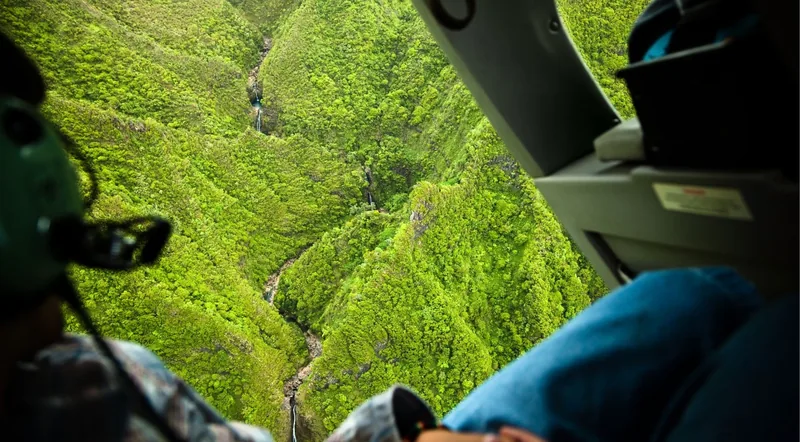
Waipiʻo and Waimanu Valleys and their 2,000-ft sea cliffs, the Kohala Mountains' amphitheatre valleys, and Pololū. The 1,200-ft Hiʻilawe Falls at the back of Waipiʻo is the single strongest argument for a Kohala route.
Lava tubes, black sand and the Place of Refuge
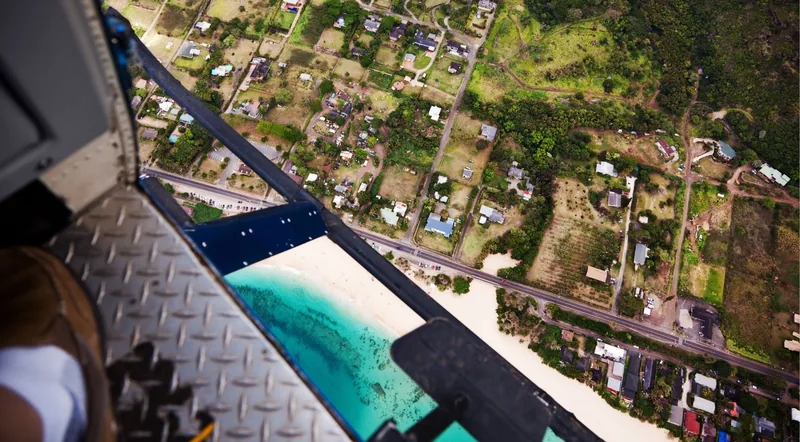
The leeward side gives you lava tubes, black-sand beaches, coffee-farm slopes and the Puʻuhonua o Hōnaunau Place of Refuge on Kealakekua Bay — with Mauna Kea and Mauna Loa filling the horizon behind.
The three places that genuinely have no other access
Waimanu Valley has no road at all — the only way in on foot is the multi-day Muliwai Trail. The amphitheatre valleys deep in the Kohala Mountains and the windward cliffs between Waipiʻo and Pololū are reachable only by air or by boat. Almost everything else on a Big Island flight can be seen some other way; these three cannot. Also on the list of things a flight shows you well: Kīlauea caldera and Halemaʻumaʻu at the ATMP's permitted distance, the Kohala Mountains, Mauna Kea and Mauna Loa, and the whole Kona coast.
Other Experiences You Might Enjoy on the Big Island
Because helicopters can no longer overfly the summit, the ground is where the volcano is.
If the eruption is the reason you came, the honest advice is to pair a flight with something on the ground. Hawaiʻi Volcanoes National Park — about $35 per vehicle for a seven-day pass — puts you at the Crater Rim Drive overlooks above Halemaʻumaʻu, which is now the only way to see the active vent. The Mauna Kea summit road climbs to 13,800 ft for sunset and stargazing above the cloud deck. And around Hilo, Rainbow Falls, the Wailuku River, Liliʻuokalani Gardens and Banyan Drive are all free, drive-up, and ten minutes apart. Here is what else is bookable nearby.
Why No Helicopter Can Fly Over the Kīlauea Summit Any More: The ATMP Explained
The Air Tour Management Plan is the defining regulatory fact for Big Island overflights, and almost no booking page mentions it.
Completed 20 December 2023
The NPS and FAA jointly authorised up to 1,548 commercial air tours per year over Hawaiʻi Volcanoes National Park, on three routes. The environmental analysis called it an 86% reduction, "reducing annual number from 11,376 to 1,565" in the draft — finalised at 1,548 after two operators stopped flying.
All three routes avoid the summit
The plan "designates three routes that avoid the summit of Kīlauea," reducing noise "to zero or near zero" near Halemaʻumaʻu and the Kīlauea Visitor Center. A commercial air tour is defined as any flight below 5,000 ft AGL over the park, or within half a mile of its boundary.
Allocations are fixed and non-transferable
Blue Hawaiian 1,176; Safari 185; Sunshine 109; Paradise/K&S 77 — now defunct, so effectively unused; Mokulele, fixed-wing, 1. Allocations cannot be transferred except to a full successor company.
Denied, June 2025
The Helicopter Association International and Safari Aviation petition — Ninth Circuit No. 24-1008 — was denied on 9 June 2025. No panel rehearing, en banc review or Supreme Court petition has followed as of August 2026. The plan is fully in force.
| Authorised route | What it shows | Direction | Minimum altitude (AGL) | Hovering |
|---|---|---|---|---|
| Puʻuʻōʻō | "Expansive views of historic volcanic activity along the East Rift Zone" | Counterclockwise, single ocean entry and exit | 1,500 ft over land / 2,000 ft over water | Allowed here only — max 1 min per location, 5 min per tour, including an expanded quiet-technology zone |
| Kahuku | "Mauna Loa from the summit to the sea," across the south Kahuku Unit along Highway 11 | Bi-directional | 1,500 ft | Prohibited |
| Coastal | Offshore coastline; must stay at least 2,000 ft laterally from shore | Bi-directional | 2,000 ft (SW→NE) / 3,000 ft (NE→SW) | Prohibited |
Days and hours you can actually fly
Standard flights run 10 a.m. to 2 p.m., Monday, Tuesday, Thursday, Friday and Saturday. Quiet-technology aircraft get a wider window: 9 a.m. to 5 p.m., Monday to Saturday, Wednesday included. There are no flights on Sundays, plus six Hawaiian cultural days and two aliʻi dates — eight no-fly days a year in total. Note that the NPS's own public FAQ inconsistently omits Saturday; the binding ATMP text includes it.
The practical consequence: operators cannot fly over the active summit caldera. Volcano helicopter tours now show the 2018 Lower East Rift Zone flow fields, Puʻuʻōʻō, the Mauna Loa flank and the coastline. To see the active summit eruption up close you have to be on the ground. This is the biggest single gap between what customers expect — "fly over the lava lake" — and 2026 reality.
Sources: NPS ParkPlanning Hawaiʻi Volcanoes Final ATMP and EA and the final ATMP/FONSI documents; the nps.gov/havo ATMP news release of 21 December 2023; the FAA ATMP programme page and environmental analysis; the Ninth Circuit memorandum in No. 24-1008, 9 June 2025; Honolulu Civil Beat.
Who Flies the Big Island in 2026: Blue Hawaiian, Safari, Rainbow, Mauna Loa and Sunshine
Bases, aircraft, whether they do doors-off, and what each one charges.
| Operator | Base | Aircraft | Doors-off? | Notable | Representative price |
|---|---|---|---|---|---|
| Blue Hawaiian | Hilo Heliport + Waikoloa Heliport | Airbus EC130 T2 (also EC130 B4, AS350 B2) | No | Largest operator in Hawaii; first US company certified under TOPS; exclusive Laupahoehoe Nui landing | Discover Hilo ~$459; Kohala Coast ~$439; Big Island Spectacular ~$719–760 |
| Safari Helicopters | Hilo Airport | Airbus AS350 AStar | No | Longest-running on the island, since 1987; best airtime per dollar for the volcano; closed weekends; 48-hour cancellation | Volcano tour ~$349 — the cheapest way to fly the volcano |
| Rainbow Helicopters | Kona Airport | Robinson R44 (3 pax, all-window) + AS350 | Yes — standard and free on every tour | Also flies Oʻahu; photographer-friendly | 30-min ~$540; 45-min Kona ~$590; 105-min Kīlauea ~$1,180 |
| Mauna Loa Helicopters | Kona Airport | Robinson R44 & R66 (4-seat turbine) | Yes — your choice | All flights private; guaranteed window seat; minimum age 12 for doors-off. Note it is primarily a flight school operating under Part 91 rather than a Part 135 air-tour certificate holder | 30-min sunset from $229/seat; 60–75-min waterfalls $429; 2-hr full island from $639 |
| Sunshine Helicopters | Hapuna Heliport (Kamuela / Waimea) | "WhisperSTAR" (EC130-class) | No | Departs beside the Westin Hapuna; 7:30 a.m. early-bird slot; front-row upgrade available | Kohala / Hāmākua ~40–45 min; Volcano Deluxe 1 h 45 m |
| Paradise Helicopters | — | — | — | Closed. Ceased all operations 4 May 2024 when the owners retired after 25 years. Was the first company in the world to earn HAI Accreditation Program of Safety accreditation for air tours. Website still live but defunct. | n/a |
| Big Island Air (fixed-wing) | Kona | Cessna Grand Caravan-class | n/a | Oldest aerial tour company on the island; fixed-wing circle-island routes | Varies |
Paradise Helicopters is closed — the website is not
Paradise ceased operations on 4 May 2024, confirmed by Hawaii News Now, KITV and lovebigisland. Its marketing site, paradisecopters.com, is still live and still advertising tours and inter-island transfers. It is stale. Do not book through it and do not send traffic to it.
Blue Hawaiian does not fly doors-off on the Big Island
Some third-party pages claim it does. It does not — Blue Hawaiian flies doors-on EC130 group tours only here. Sources implying otherwise are conflating it with Paradise's former doors-off "Lava and Rainforest" product out of Hilo, which ended with the 2024 closure.
Fixed-wing is a real option, with one caveat
Searches for "Big Island airplane tours" should land on Big Island Air at Kona, and on the fixed-wing legs of multi-island day trips flown by Mokulele. Note that Mokulele holds a fixed-wing ATMP allocation of exactly one tour per year, so its role here is transport, not sightseeing.
Resellers versus booking direct
Viator, Hawaii Discount, LeaLea, Tom Barefoot's, lovebigisland, adrenaline365, GetYourGuide and VELTRA/Hawaii Activities all list Big Island tours. Direct booking is typically the same price or better once online discounts are applied — Safari explicitly advertises "save when you book direct." Sample LeaLea rates: Big Island Spectacular $760, Kohala Coast $439, Discover Hilo $459, Hilo Waterfall $485.
Hilo vs Kona and Waikoloa: Which Side Should You Fly From?
Roughly a third of a Kona-departing volcano flight is spent transiting east before you reach anything volcanic.
| Criterion | Hilo | Kona / Waikoloa |
|---|---|---|
| Distance to volcanic terrain | Closest — a 45–55 min tour covers far more active terrain | Long transits east before anything volcanic appears |
| Price | Cheapest per person — from about $349 | Higher — about $439 to $760+ |
| Waterfalls | The Hāmākua corridor starts on the doorstep | Reached on longer Kohala and circle routes |
| Kohala & Waipiʻo cliffs | On longer Hilo routes only | The natural strength of this side |
| Operators | Safari, Blue Hawaiian (Hilo) | Rainbow, Mauna Loa (Kona); Blue Hawaiian (Waikoloa); Sunshine (Hapuna) |
| Weather pattern | Windward — wetter, frequent morning showers, but clears fast | Leeward — driest and most stable, though afternoon vog builds |
Staying in Hilo or Volcano, volcano-focused
Book a Hilo volcano tour. It is the best value on the island by a wide margin, and the closest departure point to everything you came to see.
Staying in Kona or Kohala, volcano-focused
Either drive to Hilo, or accept a pricier and longer circle tour. The drive is 1.5 to 2 hours each way via Saddle Road, the Daniel K. Inouye Highway.
You want the full island sweep
Take the roughly 1 h 45 m Big Island Spectacular or circle-island route from Waikoloa or Kona — valleys, waterfalls, coast and volcanic terrain on one flight.
What a Big Island Helicopter Tour Costs: $229 to $1,180
The spread on this island is wider than anywhere else in Hawaii, and it tracks departure point and duration almost exactly.
| Tour type | Typical price (per person) | Who flies it |
|---|---|---|
| Short Hilo volcano (~45–55 min) | ~$349 (Safari) to ~$459 (Blue Hawaiian Discover Hilo) | Safari, Blue Hawaiian |
| Hilo waterfall | ~$485 (Blue Hawaiian Hilo Waterfall Experience) | Blue Hawaiian |
| Kohala Coast (Waikoloa, 45–50 min) | ~$439 | Blue Hawaiian |
| 2-hour circle island / Big Island Spectacular | ~$719–760 (Blue Hawaiian, Waikoloa); Mauna Loa full island from $639; private R66 full island $2,240, about $560 each for four | Blue Hawaiian, Mauna Loa |
| Doors-off (Kona) | ~$540 (30 min) to ~$1,180 (105-min Kīlauea) with Rainbow; Mauna Loa priced by route | Rainbow, Mauna Loa |
| Short private sunset (Kona) | From $229 per seat — the cheapest way into the air here | Mauna Loa (30-min sunset) |
The landing tour, and its unposted supplement
Blue Hawaiian's exclusive Laupahoehoe Nui landing puts you on the ground for 20 to 25 minutes beside a roughly 1,200-ft waterfall, sold as an upgrade to the Spectacular; with the landing the flight runs about 2 h 30 m. Third-party reviews report a supplement of about $225, but the operator does not always post it as a standalone number — confirm the live figure on bluehawaiian.com before you book.
Weight and comfort-seat policies vary by operator
This is the surcharge that catches people out, and every operator sets it differently:
- Blue Hawaiian: guests 240 lb and over must buy an adjacent empty seat — the second seat is half price.
- Safari: guests 270 lb and over buy an additional empty seat, less 15%. Front seat has a combined 330 lb maximum.
- Rainbow: 250–274 lb triggers a weight-and-balance fee of 50% of the seat price; 275 lb and over requires an extra seat.
- Mauna Loa: a flat 275 lb per-person limit.
Discounts worth asking about
Online-booking discounts, early-bird or first-flight-of-the-day rates, standby, and kamaʻāina and military rates are all common, though availability varies by operator and season.
These prices are indicative — and rising
Every figure here was drawn from operator sites and resellers in August 2026, and they move with season, fuel surcharges and demand. The trend is upward: Big Island tours now run from about $229 for a short private Kona sunset to $760+ for the circle island and $1,180+ for doors-off Kīlauea from Kona. Re-confirm each figure live before you book.
Doors-Off Helicopter Tours on the Big Island: Who Offers Them and Who Should Book
Doors-off is a Kona product here. Neither Hilo operator flies it.
Offers doors-off
- Rainbow Helicopters (Kona) — doors-off standard and free on every tour, in the R44 and AS350
- Mauna Loa Helicopters (Kona) — doors-on or doors-off by choice, all flights private, R44 and R66
Does not offer doors-off
- Blue Hawaiian — doors-on EC130 only on the Big Island
- Safari — doors-on AS350 only
- Paradise — its Hilo doors-off product ended with the 2024 closure
The restrictions are real, not decorative
Closed-toe shoes; warm, snug clothing; no loose items at all — no hats, no scarves, no unsecured phones. Passengers are securely harnessed. The minimum age rises: Mauna Loa requires 12 for doors-off against 7 doors-on. Cameras and GoPros are allowed but must be tethered, and selfie sticks are banned.
Who should book it — and who really should not
Doors-off suits photographers who want unobstructed frames, and travellers who want the thrill. It does not suit the anxious, the cold-sensitive, the motion-sick or young children. Take the cold seriously: multiple reviewers have described a doors-off flight as "too cold to enjoy the scenery."
Rainbow Falls: You Do Not Need a Helicopter, but It Is on Every Hilo Route
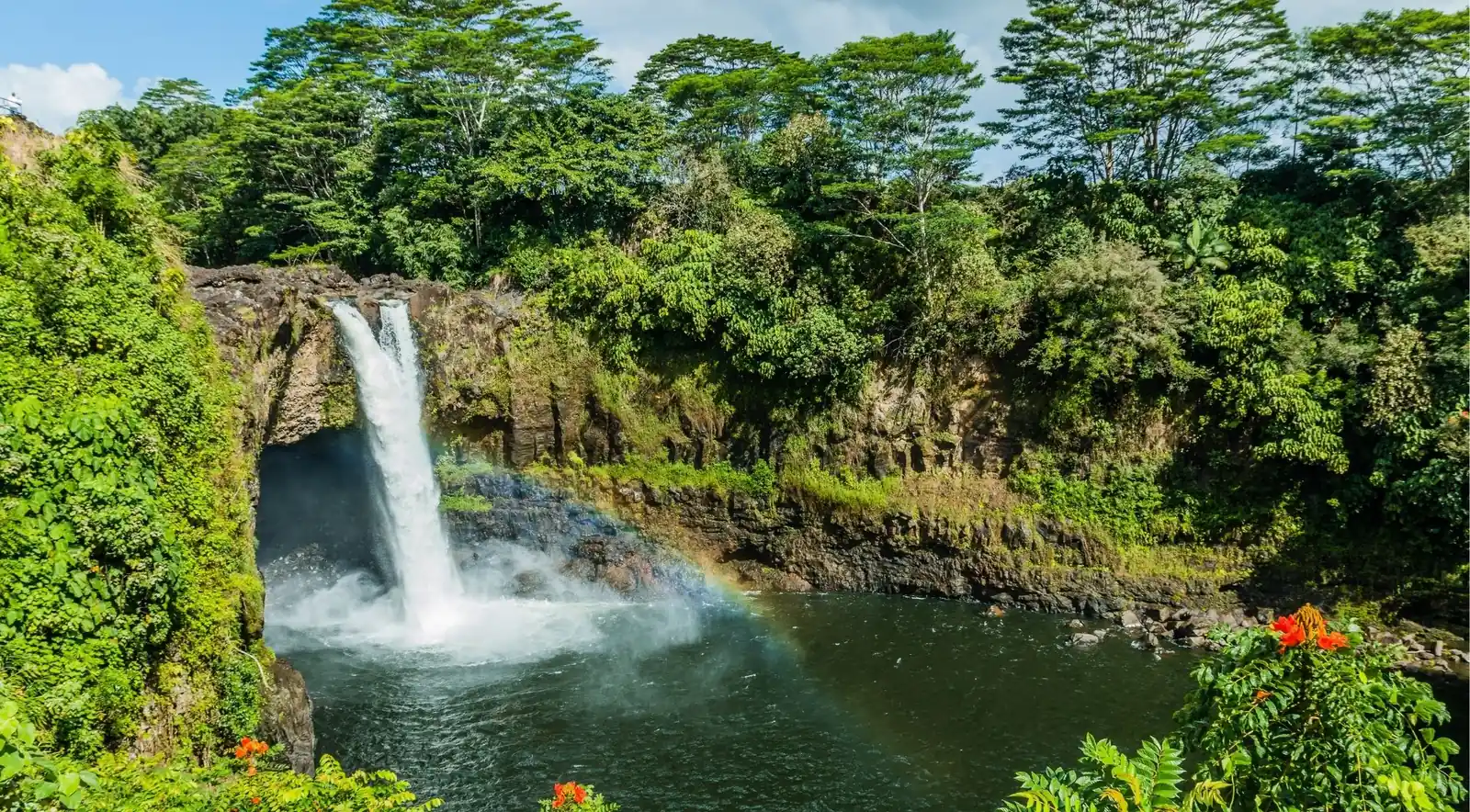
One of the most-searched sights on the island, and one of the few that costs nothing to reach.
Rainbow Falls sits on the Wailuku River in Hilo and is free, drive-up and open to everyone. There is a car park, a short paved path and a viewing platform. If you are staying anywhere near Hilo you should simply go — morning is when the rainbow in the spray is most likely, which is where the name comes from. It appears on essentially every Hilo helicopter route as well, and on the Hilo ground segment of the multi-island day trips further down this page, but a flight is not what gets you there.
The genuinely air-only waterfall on this island is Hiʻilawe Falls, roughly 1,200 ft, at the back of Waipiʻo Valley — and the reason it is air-only is a road closure rather than terrain. Further up the Hāmākua coast, ʻAkaka Falls at 442 ft has its own state park and a paved loop trail, so that is another one you can reach on foot.
Waipiʻo Valley: still closed, which is exactly why people fly it
The Waipiʻo Valley road has been closed since February 2022. As of 1 July 2026 the 24th continued emergency rule is in force through 2 September 2026, and the underlying traffic-emergency-zone declaration runs to 25 February 2027 — so expect renewal rather than reopening. The road is closed to all pedestrians, uncovered vehicles and ATVs, and horseback riders. It is open only to Hawaiʻi County residents, permitted licensed and insured tour operators, and Native Hawaiians exercising traditional and customary rights.
The lookout is open and free. The valley floor is reachable by permitted tour only — the Waipiʻo Valley Shuttle was about $67 per adult as of July 2026. This restriction is the strongest single argument for flying the Kohala side: right now, the air is one of very few ways to see Waipiʻo and Hiʻilawe Falls properly.
How Safe Are Big Island Helicopter Tours? The Rules, the Record and the Pending Petition
Statewide, Hawaii has the worst US helicopter-sightseeing record. The Big Island's own history is the lightest of the four flying islands.
Part 135, Part 136 and a 1,500 ft floor
Operators fly under FAA Part 135. Air tours are governed by 14 CFR Part 136, and §136.75 sets a 1,500 ft AGL minimum for Hawaii air tours, with limited terrain exceptions. SFAR 71, adopted in 1994, was the earlier Hawaii-specific rule — minimum altitudes, weather minimums and two-way passenger briefings — later folded into Part 136.
51 deaths since 2000, concentrated on Kauaʻi
Honolulu Civil Beat counted "38 accidents and 45 fatalities since 2000" in January 2020, with Kauaʻi by far the worst at 25 fatalities, against four each on Oʻahu and Hawaiʻi Island, seven on Maui and five on Molokaʻi. By April 2026 the statewide total had reached 51 deaths. The Big Island's fatal record is comparatively light.
Two notable, neither fatal
8 June 2022: a Paradise Helicopters Bell 407 came down on a lava field near South Point about 30 minutes out of Kona — all 6 aboard injured, none killed, at a site roughly a mile from the nearest road. 5 March 2020: a Blue Hawaiian EC130 on a "Circle of Fire" tour out of Hilo made a hard landing and rolled over near Volcanoes National Park after an engine warning — injuries, no fatalities.
TOPS, HAI-APS and IS-BAO
Blue Hawaiian was the first US company certified under TOPS, the Tour Operators Program of Safety. Paradise Helicopters was the first air-tour company in the world to earn HAI Accreditation Program of Safety accreditation for air tour operations, in March 2016, and reportedly the first and only IS-BAO Stage 3 operator in Hawaii, in December 2017 — a separate accreditation track from TOPS. But Paradise is now closed. Memberships lapse, so confirm current TOPS, IS-BAO and VAI accreditation for each active operator rather than trusting a legacy claim.
The two crashes that shaped the current rules — both on Kauaʻi
26 December 2019 — Safari Aviation AS350, near Kekaha on Kauaʻi — 7 killed. This was the catastrophic one, and it was not on the Big Island. The NTSB blamed the pilot's decision to continue VFR into IMC — visual flying into instrument conditions — and faulted the FAA for delays on a Hawaii weather-camera programme and cue-based weather training it had recommended years earlier. It matters here because Safari is also the Hilo operator offering the cheapest volcano flight on this island.
26 March 2026 — Airborne Aviation Tours, off Kalalau Beach on Kauaʻi's Nā Pali Coast — 3 killed. A doors-off flight. Per Honolulu Civil Beat it was "the 13th fatal helicopter crash in Hawaiʻi in 25 years and nine of those –– including the three most recent fatal accidents –– have been on Kauaʻi." That concentration is the most useful safety fact in the state: the risk is real, and it is overwhelmingly not on this island. If you are booking doors-off here, book it knowing that.
One marketing claim to discount
Safari markets flying at "500–1,000 ft." That language is legacy, reflecting terrain exceptions that predate the current ATMP altitude regime — do not read it as a general rule for what you will get today. The binding floors are the ones in the route table above.
The pending petition: Blue Hawaiian wants to fly at 700 ft
Blue Hawaiian, trading as Helicopter Consultants of Maui, has petitioned the FAA — docket FAA-2025-0301 — for an exemption from §136.75's 1,500 ft minimum, so it could descend to as low as 700 ft AGL in specified areas. On this island those are Waikoloa Heliport to the Kīlauea summit, Hilo to Pololū, and Makuʻu Point to the Puʻuʻōʻō vent — plus 500 ft along razorback ridges. The company frames it as a safety and cloud-avoidance measure. The Honolulu Star-Advertiser reported on 12 September 2025 that the request drew "more than 55,000 public comments — many in opposition." The comment period closed on 8 September 2025 and there was no FAA ruling as of August 2026. The 1,500 ft rule remains in effect.
Volcanic hazards are part of the go/no-go call here
Flying near an active volcano adds hazards the other islands do not have: volcanic gas (SO₂), ash and tephra, vog — volcanic smog, worst on the leeward Kona side — and laze, the hydrochloric-acid mist that forms where lava meets seawater. Ash ingestion is a genuine risk to turbine engines. The FAA issues polygon-shaped temporary flight restrictions over active eruption and flow zones, from the ground to about 1,500 ft, during eruptions — as it did in 2018 and 2022 — sometimes permitting only USGS, utility and university aircraft. Combined with the ATMP, that is a second reason no tour flies over the fountaining vent. Reputable operators reroute or cancel for gas, ash or weather; treat that as the system working.
Sources: Honolulu Civil Beat, January 2020 and April 2026; 14 CFR Part 136 and §136.75; SFAR 71 (1994); Federal Register and regulations.gov docket FAA-2025-0301; Honolulu Star-Advertiser, 12 September 2025; bluehawaiian.com on TOPS; NTSB accident dockets; aviationlawgroup.com; beatofhawaii.com.
Booking and Preparing for a Big Island Helicopter Tour
Check-in times, the weigh-in, what to wear, seat upgrades and the cancellation windows that differ by operator.
How far ahead to book
Several days to a few weeks out is usually enough — but during active eruption episodes demand spikes sharply, so book earlier and stay flexible. Morning slots fill first, and Hilo departures sell out fastest when an episode is running.
Check-in times differ by heliport
Hilo: 30 to 45 minutes before departure. Waikoloa: 45 to 60 minutes. Photo ID is required. The Kona flight we list asks for a full hour at the Big Island Jet Center.
The weigh-in
The FAA requires every passenger to be weighed discreetly at check-in for weight and balance. Comfort and empty-seat thresholds run from 240 to 275 lb depending on the operator. Give accurate weights when you book — a misdeclaration can bump you to a later flight or a larger aircraft.
What to wear and bring
Dark clothing to cut window glare in photographs. Closed-toe shoes are required. A light jacket — it is cool at altitude and genuinely cold doors-off. Bring a camera, and sunglasses for the Kona daytime glare.
What is prohibited
On doors-off flights, no loose items whatsoever — hats, scarves, unsecured phones. Selfie sticks are generally banned outright. Cameras and GoPros are fine but must be strapped or tethered; operators also sell an onboard three-camera SkyCam video on USB.
Best seats and front-seat upgrades
The front seat is a paid upgrade with some operators — Safari caps it at a combined 330 lb. Rainbow and Mauna Loa guarantee window seats. Blue Hawaiian assigns seats by weight and balance at check-in, so they cannot be pre-selected.
Motion sickness
Choose a morning flight for the calmest air. Operators offer ginger mints, and medication taken 30 to 60 minutes before the flight is the standard advice.
Children, infants and accessibility
Minimum ages vary: Mauna Loa requires 7 doors-on and 12 doors-off; Safari takes children 8 and over in the front middle seat and 12 and over beside an open door; several operators allow ages 2 and up. Accessibility is limited — wheelchair users and guests at 280 lb or more are often restricted or need prior approval.
Weather and vog cancellations
Common and expected here. The standard remedy is a full refund or a reschedule. Cancellation windows differ: 24 hours is typical, Safari requires 48, and the Kona flight we list allows free cancellation up to 2 days before.
The Best Time to Fly the Big Island
Morning almost always wins — but the reason differs on each side of the island.
Time of day: morning, on both coasts
Morning is best statewide — calmer air, less cloud build-up, smoother rides and better photography. On the windward Hilo side mornings bring frequent showers but also clear fast, and the earliest flights beat the cloud building over Kīlauea. On the leeward Kona side the problem is afternoon vog build-up, which degrades visibility as the day goes on. Both point the same way.
Season: drier summer, fuller winter waterfalls
Drier late spring and summer means fewer cancellations. Winter, roughly November to March, brings fuller Hāmākua waterfalls after rain and humpback whales visible from coastal flights — at the cost of more weather cancellations.
Eruption timing is a forecast, not a schedule
Fountaining is unpredictable and USGS publishes windows rather than times. Check HVO the morning of your flight. And remember the ATMP's daytime-only hours — standard flights run 10 a.m. to 2 p.m. — which is narrower than most operators' published schedules imply.
"Night lava flights" barely exist in 2026
Treat any night-lava marketing with suspicion. Mauna Loa Helicopters runs a 5:30 p.m. dusk and sunset flight from Kona, and volcanic aerosols do enhance sunset colour when the volcano is erupting. But dedicated after-dark lava overflights are not a standard 2026 product, given TFRs and the ATMP's daytime hours. Anything advertised as a "night lava flight" is most likely a ground tour or a dusk flight, not a full-dark overflight.
Multi-Island Volcano Day Trips: Fixed-Wing Plus Ground, Not a Cross-Channel Helicopter
The most common misconception in this category, and the one worth correcting before you pay.
A "volcano tour from Oʻahu" is a combo package: an inter-island fixed-wing flight, typically Honolulu to Hilo or Kona, plus a ground tour of Hawaiʻi Volcanoes National Park, plus — on some packages, as an option or an inclusion — a roughly 45-minute Big Island helicopter tour, often with ʻAkaka Falls and lunch. It is not a single sightseeing helicopter flight across the channel. Helicopters do not carry tourists across open ocean between the islands on these products.
Expect roughly 16 hours door to door, though a shorter version of about 12.5 hours is also sold. Prices start from around $842 from Oʻahu, with round-trip airfare, park admission and lunch included and the helicopter as an upgrade. Note the weight surcharge: guests over 240 lb pay roughly $220 extra for the helicopter portion. The same trip is sold from Maui, usually via an Oʻahu layover. Sellers in 2026 include Viator, GetYourGuide, VELTRA/Hawaii Activities, Polynesian Adventure Tours, hawaiitours.com, volcanotours.com, oahuvolcanotour.com, Hawaii Volcano Expeditions and Pearl Harbor Tours.
What Changed Recently, and What Is Still Unresolved
Two of these are open questions rather than settled facts — we have flagged which.
-
The ATMP is fully in force
The Ninth Circuit denied the industry challenge on 9 June 2025. This is the defining regulatory fact for Big Island overflights, and it is not going to change soon.
-
Blue Hawaiian's 700-ft petition is still pending
Docket FAA-2025-0301 had no ruling as of August 2026, against strong community opposition — more than 55,000 comments. If the FAA grants it, the altitude picture on this page changes.
-
Paradise Helicopters closed in May 2024
A major operator exit. Update any older guide you are reading against this — and ignore paradisecopters.com, which is still live and still marketing.
-
Kīlauea is in a record episodic eruption
Fifty-two-plus episodes since 23 December 2024. Episode 48, on 1 June 2026, broke the previous record of 47 high-fountain episodes set by Puʻuʻōʻō between 1983 and 1986. It is a huge demand driver — and tours still cannot overfly the summit.
-
Waipiʻo Valley road remains closed to non-residents
The 24th emergency rule runs through 2 September 2026 and the underlying declaration to February 2027. It reinforces the case for seeing Waipiʻo from the air.
-
The Hawaiʻi "Green Fee" raised the lodging tax
Act 96 (SB 1396), signed 27 May 2025 and billed as "the nation's first-ever climate impact fee," raised the statewide Transient Accommodations Tax by 0.75% to 11% from 1 January 2026 on hotels and vacation rentals — projected to raise about $100M a year. County surcharges can add up to roughly 3% more. The separate 11% cruise-fare provision was blocked by a federal appeals-court injunction on New Year's Eve 2025, and that litigation continues, with the DOJ intervening and calling it "illegal extortion." Practical effect on you: lodging costs a little more in 2026; the helicopter ticket itself is not taxed by this.
-
Local sentiment on the Big Island runs strongly anti-overflight
In Hilo, Puna and Kona, community feeling is firmly against tour helicopters. The ATMP was driven partly by Native Hawaiian cultural concerns — Mauna Loa and Kīlauea are sacred — as well as by noise. It is worth knowing whose sky you are in.
Sources: mauinow.com, kauainownews.com, bigislandnow.com, khon2.com, hawaiitribune-herald.com and beatofhawaii.com on the Green Fee; the Office of the Governor's Act 96 release; hawaiicounty.gov on the Waipiʻo emergency rules; nps.gov/havo on park fees; USGS HVO on eruption episodes.
Big Island Helicopter Tours in Photos
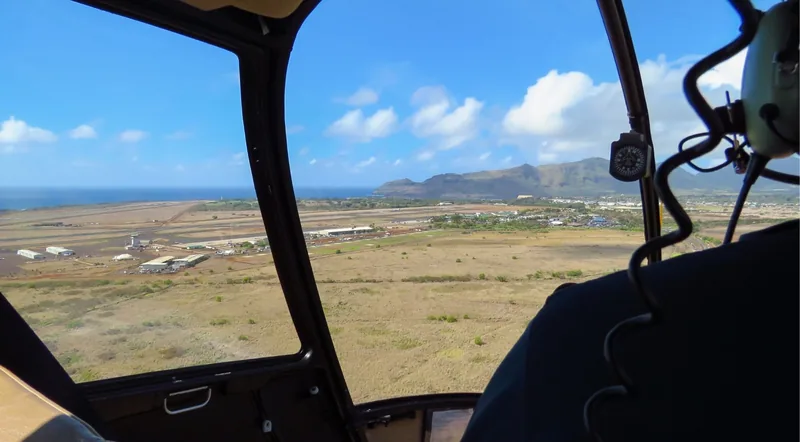
Scroll or drag to browse.

Big Island Helicopter Tours: Common Questions
Lava, routes, prices, operators and the rules that changed everything in 2023.
Can you see lava on a Big Island helicopter tour?
Not reliably, and since December 2023 not from above the summit at all. Kīlauea has been erupting episodically since 23 December 2024, and fountaining episodes are short — HVO describes them as generally lasting less than 12 hours, the observed range runs 8 hours to 8 days with most under a day, and pauses between them run from under 24 hours to about three weeks. On a randomly chosen day the most probable sight is steaming and glowing vents plus fresh black lava flow fields, not fountaining. As of the USGS notice of 6 September 2026 the eruption is paused, with episode 55 forecast for 7–10 September. Check the USGS HVO daily update the morning you fly.
Why can't helicopters fly over the Kīlauea summit any more?
Because of the Air Tour Management Plan completed by the NPS and FAA on 20 December 2023. It authorises up to 1,548 commercial air tours a year over Hawaiʻi Volcanoes National Park, on three routes that all avoid the Kīlauea summit — an 86% reduction from about 11,376 flights. The industry challenged it and the Ninth Circuit denied the petition on 9 June 2025, so it is fully in force. Tours now show the 2018 Lower East Rift Zone flow fields, Puʻuʻōʻō, the Mauna Loa flank and the coastline. To see the active vent, go to the Crater Rim Drive overlooks on the ground.
Should I fly from Hilo or Kona?
Hilo if the volcano is the point. It is closest to Kīlauea and the Hāmākua waterfall coast, and it is cheapest — a 45 to 55 minute Hilo tour covers far more active terrain than the same duration out of Kona, where roughly a third of the flight is spent transiting east. Kona or Waikoloa if you want the full island sweep: the Kohala Coast, Waipiʻo's 2,000-ft cliffs and the south Kona coastline. If you are staying on the Kona side and volcano-focused, the drive to Hilo is 1.5 to 2 hours each way on Saddle Road, and it may still be the better call.
How much does a Big Island helicopter tour cost?
Roughly $229 to $1,180 per person, the widest spread of any Hawaiian island. A short Hilo volcano flight of 45 to 55 minutes runs about $349 with Safari to $459 for Blue Hawaiian's Discover Hilo. The Hilo Waterfall Experience is about $485 and the Kohala Coast route about $439. The two-hour Big Island Spectacular circle-island flight is $719 to $760. Doors-off from Kona with Rainbow runs $540 for 30 minutes to about $1,180 for the 105-minute Kīlauea route. The cheapest way into the air is Mauna Loa's 30-minute Kona sunset flight from $229 a seat.
Which Big Island operators offer doors-off?
Only two, and both are at Kona. Rainbow Helicopters offers doors-off as standard and free on every tour, in the R44 and AS350. Mauna Loa Helicopters lets you choose doors-on or doors-off on its all-private R44 and R66 flights. Blue Hawaiian and Safari do not fly doors-off on this island — Blue Hawaiian is doors-on EC130 only and Safari is doors-on AS350 only. Paradise's former Hilo doors-off product ended when the company closed in 2024.
Is Paradise Helicopters still operating?
No. Paradise Helicopters ceased all operations on 4 May 2024, when its owners retired after 25 years. Its website, paradisecopters.com, is still live and still marketing tours and inter-island transfers — it is stale, and you should not book through it. This matters historically too: Paradise was the first company in the world to earn HAI Accreditation Program of Safety accreditation for air tour operations, and it held 77 of the park's air-tour allocations, which are now effectively unused.
What days and hours can air tours fly over Hawaiʻi Volcanoes National Park?
Standard flights run 10 a.m. to 2 p.m. on Monday, Tuesday, Thursday, Friday and Saturday. Quiet-technology aircraft may fly 9 a.m. to 5 p.m., Monday to Saturday, Wednesday included. There are no flights on Sundays, plus six Hawaiian cultural days and two aliʻi dates — eight no-fly days a year. Note that the NPS's own public FAQ inconsistently omits Saturday; the binding ATMP text includes it.
How safe are Big Island helicopter tours?
Statewide, Hawaii has the worst US helicopter-sightseeing record — 51 deaths since 2000 by April 2026 reporting — but that total is heavily concentrated on Kauaʻi, which accounted for 25 of the 45 fatalities counted in January 2020, against four on Hawaiʻi Island. This island's two notable tour incidents were both non-fatal: a Paradise Bell 407 on a lava field near South Point in June 2022, and a Blue Hawaiian EC130 hard landing out of Hilo in March 2020. Operators fly under FAA Part 135 with a 1,500 ft AGL minimum under 14 CFR §136.75, and Blue Hawaiian was the first US company certified under TOPS.
Can you still drive into Waipiʻo Valley?
No, unless you qualify. The road has been closed since February 2022, and as of 1 July 2026 the 24th continued emergency rule runs through 2 September 2026, with the underlying declaration to 25 February 2027 — so expect renewal rather than reopening. It is closed to all pedestrians, uncovered vehicles and ATVs, and horseback riders, and open only to Hawaiʻi County residents, permitted licensed and insured tour operators, and Native Hawaiians exercising traditional and customary rights. The lookout is open, and the valley floor is reachable by permitted tour only — about $67 per adult on the Waipiʻo Valley Shuttle as of July 2026.
When is the best time of day and year to fly the Big Island?
Morning, on either coast. On the windward Hilo side, morning showers clear fast and the earliest flights beat the cloud building over Kīlauea. On the leeward Kona side, afternoon vog degrades visibility as the day goes on. For season: drier late spring and summer means fewer cancellations, while November to March gives you the fullest Hāmākua waterfalls and humpback whales from coastal routes, at the cost of more weather cancellations. Remember the ATMP's 10 a.m. to 2 p.m. standard window over the park.
Can you take a helicopter from Oʻahu or Maui to the Big Island volcano?
No. Those "volcano tours from Oʻahu" are combo packages — an inter-island fixed-wing flight, a ground tour of Hawaiʻi Volcanoes National Park, and on some packages an optional or included 45-minute Big Island helicopter tour. Helicopters do not carry tourists across open ocean between the islands on these products. Budget about 16 hours door to door and from roughly $842 from Oʻahu, with a weight surcharge of about $220 for the helicopter portion if you are over 240 lb.
Do they weigh you, and what happens if I am over the limit?
Yes — the FAA requires every passenger to be weighed discreetly at check-in for weight and balance. The thresholds differ by operator: Blue Hawaiian requires guests of 240 lb and over to buy an adjacent empty seat at half price; Safari requires an additional empty seat at 270 lb and over, less 15%, and caps the front seat at a combined 330 lb; Rainbow charges 50% of a seat price between 250 and 274 lb and requires an extra seat at 275 lb and over; Mauna Loa sets a flat 275 lb limit. Give accurate weights when booking — a misdeclaration can bump you to a later flight.
Are there night lava flights on the Big Island?
Effectively no. Dedicated after-dark lava overflights are not a standard 2026 product, because of temporary flight restrictions over active eruption zones and the ATMP's daytime-only hours. Mauna Loa Helicopters does run a 5:30 p.m. dusk and sunset flight from Kona, and volcanic aerosols genuinely enhance sunset colour when the volcano is erupting — but that is dusk, not full dark. Treat any "night lava flight" marketing with suspicion; it is most likely a ground tour or a dusk flight.
Can you see Rainbow Falls from a helicopter?
Yes, and it appears on essentially every Hilo route — but you do not need a helicopter for it. Rainbow Falls is free, drive-up and open to everyone, on the Wailuku River in Hilo, with a car park, a short paved path and a viewing platform. Morning is when the rainbow in the spray is most likely. The same applies to ʻAkaka Falls at 442 ft, which has its own state park and a paved loop trail. The genuinely air-only waterfall on this island is the roughly 1,200-ft Hiʻilawe Falls at the back of the closed Waipiʻo Valley.
Other Ways to See Hawaii From Above — and the One Way to See the Eruption
The Big Island is the volcanic island. It is not the scenic one, and it is not the cheap one.
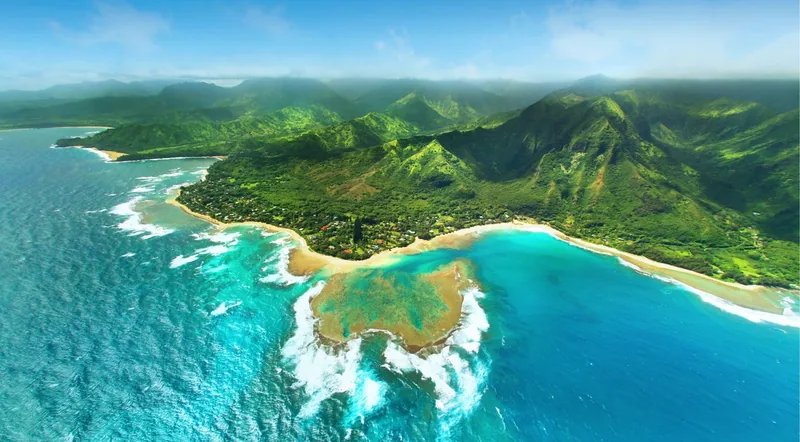 All four islands · compared
Which Hawaiian Island Should You Fly?
Kauai for scenery, Maui for sea cliffs and landings, Oʻahu for short trips and doors-off, the Big Island for volcanic terrain. Our cross-island guide lays out price per minute, doors-off availability, landing tours and the safety record island by island.
Compare all four islands
Big Island · 13,800 ft · no aircraft required
Mauna Kea Summit at Sunset, Then Stargazing
The island's other altitude experience, and the one with a real review base. A 4x4 van climbs to the 13,800 ft summit for sunset, then drops to 12,000 ft for stargazing through a refractor telescope. Parkas, ski pants and gloves are provided, along with a sandwich, a hot drink and free DSLR photos. Minimum age 16, and there is a long list of conditions it does not suit — read those first.
MaunaKea Summit Sunset and Star Tour by Hawaiian Eyes Tours · ★ 4.8 (317 reviews) · from $290 Note: this is a 4x4 ground tour, not a flight. Check availability